Crawlspace Waterproofing in Murfreesboro & Middle Tennessee
Protect Your Home from Water Damage, Mold, and Structural Issues
Water intrusion in your crawlspace is one of the most damaging problems a home can face. Even minor leaks or persistent moisture can lead to mold, wood rot, musty odors, and compromised structural integrity. Professional crawlspace waterproofing ensures your home stays dry, safe, and energy-efficient.
At Crawlspace Crew, we specialize in crawlspace waterproofing services throughout Murfreesboro, Nashville, Smyrna, Lebanon, Franklin, and the surrounding Middle Tennessee area. Our team combines proven techniques, high-quality materials, and local expertise to protect your home from costly water damage.
What Is Crawlspace Waterproofing?
Crawlspace waterproofing is a comprehensive process that prevents water from entering your crawlspace and damaging your home. It typically includes:
Waterproofing barriers on walls and floors
Drainage solutions like egress drains and sump pumps
Vent sealing and vapor barriers to control humidity
Moisture monitoring and dehumidification
The goal is to create a fully protected, dry environment that prevents structural damage and improves indoor air quality.
Signs Your Crawlspace Needs Waterproofing
You may need crawlspace waterproofing if you notice:
Standing water or puddles in the crawlspace
Musty odors or visible mold growth
Sagging floors or warped wooden beams
High humidity levels or condensation on pipes
Increased energy bills due to HVAC inefficiency
Acting early can prevent long-term damage and costly repairs.
Benefits of Crawlspace Waterproofing
Complete Moisture Control – Eliminates water intrusion and protects against flooding.
Mold & Mildew Prevention – Keeps your home safe from allergens and structural decay.
Structural Protection – Protects beams, joists, subflooring, and insulation from water damage.
Improved Air Quality – Reduces musty odors and allergen circulation in living spaces.
Energy Efficiency – A dry crawlspace helps your HVAC system run more efficiently.
Increased Home Value – A professionally waterproofed crawlspace is a major selling point.
Our Crawlspace Waterproofing Process
At Crawlspace Crew, we follow a step-by-step approach for reliable results:
Crawlspace Inspection – Identify water entry points, leaks, or standing water.
Moisture Assessment – Measure humidity levels and determine the scope of waterproofing needed.
Drainage Solutions – Install egress drains, sump pumps, or French drains to channel water away from the foundation.
Vapor Barrier Installation – Lay a durable, reinforced barrier across the floor and up the walls to block moisture.
Vent Sealing & Insulation – Seal vents and add insulation where needed to maintain proper airflow and temperature.
Optional Dehumidifier Installation – Control humidity and maintain a consistently dry environment.
Final Inspection & Maintenance Plan – Ensure the system works perfectly and provide guidance for long-term crawlspace health.
Why Choose Crawlspace Crew for Waterproofing in Middle Tennessee?
Local Expertise – We understand Murfreesboro and Middle Tennessee’s unique soil, rain, and humidity challenges.
Comprehensive Solutions – Our team integrates drainage, vent sealing, insulation, and dehumidifiers for total protection.
High-Quality Materials – Durable, professional-grade waterproofing systems designed to last.
Trusted Service – Homeowners across Middle TN rely on Crawlspace Crew for honest, reliable, long-term solutions.
Crawlspace Waterproofing vs. Encapsulation vs. Dehumidifier: Which Solution Do You Need?
Many homeowners in Murfreesboro and Middle Tennessee wonder whether waterproofing alone is enough, or if full crawlspace encapsulation or a dehumidifier is also necessary. Each solution addresses different aspects of moisture control, and the best choice depends on your home’s condition.
Crawlspace Waterproofing
What It Does:
Waterproofing prevents water from entering your crawlspace through walls, floors, or drainage issues.
Pros:
Protects foundation, beams, and insulation from water damage
Reduces flooding and standing water
Essential for homes with frequent water intrusion
Cons:
Doesn’t fully control humidity in the air above the barrier
May still require additional vent sealing or a dehumidifier
Crawlspace Encapsulation
What It Does:
Encapsulation seals your entire crawlspace, including floors, walls, and vents, often paired with a vapor barrier and optional dehumidifier.
Pros:
Superior moisture control and mold prevention
Improves indoor air quality
Enhances energy efficiency
Provides a clean, pest-resistant crawlspace
Cons:
Higher upfront cost than waterproofing alone
Requires professional installation for best results
Crawlspace Dehumidifier
What It Does:
A dehumidifier removes excess moisture from the air in your crawlspace, keeping humidity at safe levels year-round.
Pros:
Prevents mold and mildew growth
Protects wooden beams, insulation, and floors
Works well with encapsulated or partially sealed crawlspaces
Cons:
Doesn’t stop water intrusion from outside
May need to be combined with waterproofing or encapsulation for complete protection
Which Option Is Right for Your Home?
In Middle Tennessee’s humid climate, many homeowners benefit from a combined solution:
Waterproofing to stop water from entering
Encapsulation to seal the crawlspace and protect against humidity
Dehumidifier to maintain consistent air moisture levels
At Crawlspace Crew, we perform a free crawlspace inspection to measure moisture, check for mold, and assess your foundation. We then recommend the ideal solution — or combination — for long-term crawlspace protection.
📞 Call Crawlspace Crew today to schedule your free inspection and find out whether crawlspace waterproofing, encapsulation, dehumidifiers, or a combination is best for your home in Murfreesboro, Nashville, Smyrna, or anywhere in Middle Tennessee.
Waterproofing is what you do when water is actively getting into the crawl space, not just humidity. It means finding the entry point, cutting drainage to intercept the water, and giving it somewhere to go — then sealing. Sealing first is the single most common mistake we are called out to undo, because a liner over active water just holds it against your foundation.
Signs you have a water problem, not a humidity problem
- Standing water or saturated ground after any decent rain
- Horizontal water lines or staining on the block piers and walls
- Efflorescence — white chalky residue — on the block
- Rust on duct straps, jack posts or anything metal near the ground
- A crawl space that is fine in August and under water in March
- Mud or silt that has clearly moved and settled somewhere
How we waterproof a crawl space
- Find the entry pointWe look at where the water is coming from — grading, downspouts, an uphill wall, a high water table — before proposing anything. The fix depends entirely on the answer.
- Fix what is outside firstSometimes the honest answer is a downspout extension and regrading rather than a system under the house. If that is your situation we will say so.
- Trench and drainWhere water has to be intercepted, we cut a trench at the low points, lay gravel and drain line, and route it to a basin.
- Set the basin and pumpA sump basin at the low point with a pump and a discharge line that carries water well away from the foundation, not two feet from it.
- Seal the spaceOnly once the water has somewhere to go does the liner go down — floor, walls and piers, seams sealed.
- Control what is leftVents closed and a dehumidifier sized to the space, so what the drainage cannot catch does not sit in the air.
What waterproofing costs
Waterproofing is quoted after the inspection, because the price is driven by how much trenching is needed and where the water has to be sent. What drives the price is broken down on the crawl space encapsulation cost page, and every number we give you is written on site before we leave.
Waterproofing questions
Can I just seal it and skip the drainage?
No, and this is the thing we most often get called to fix. A liner over active water traps it against the block and the framing. It looks better for a season and then you have the same problem with a plastic lid on it.
How do you know where the water is coming from?
Water lines on the piers, the direction silt has moved, staining patterns on the block, and moisture readings around the perimeter. It is usually obvious once you are under there with a light — which is why we do not quote over the phone.
Do you fix grading and gutters too?
We will tell you what needs doing outside, because that is frequently the cheapest part of the fix. Getting downspouts away from the foundation solves a surprising number of crawl space problems on its own.
Will this stop it flooding every spring?
That is the goal, and it is what the drainage is for. A space that takes on seasonal water needs somewhere for that water to go, permanently — a basin, a pump and a discharge line that runs away from the house.
Get the water problem diagnosed
Free inspection, photographs of what is actually happening down there, written price.
Call (615) 436-2739Book OnlineRelated: Sump pump installation · Drainage systems · French drains · Full encapsulation
We do this work across Middle Tennessee: Murfreesboro · Smyrna · Nashville · Franklin · Hendersonville · Lebanon · Columbia · Cookeville · all service areas · 29 before & afters
Waterproofing Gallery
Wet Crawl Spaces We Have Dried Out
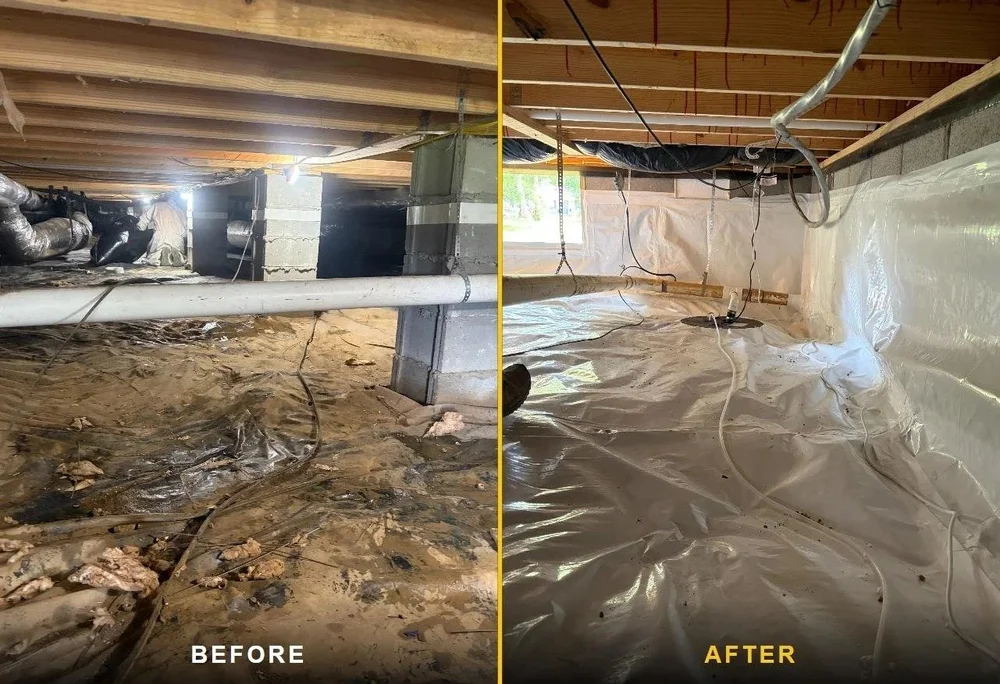
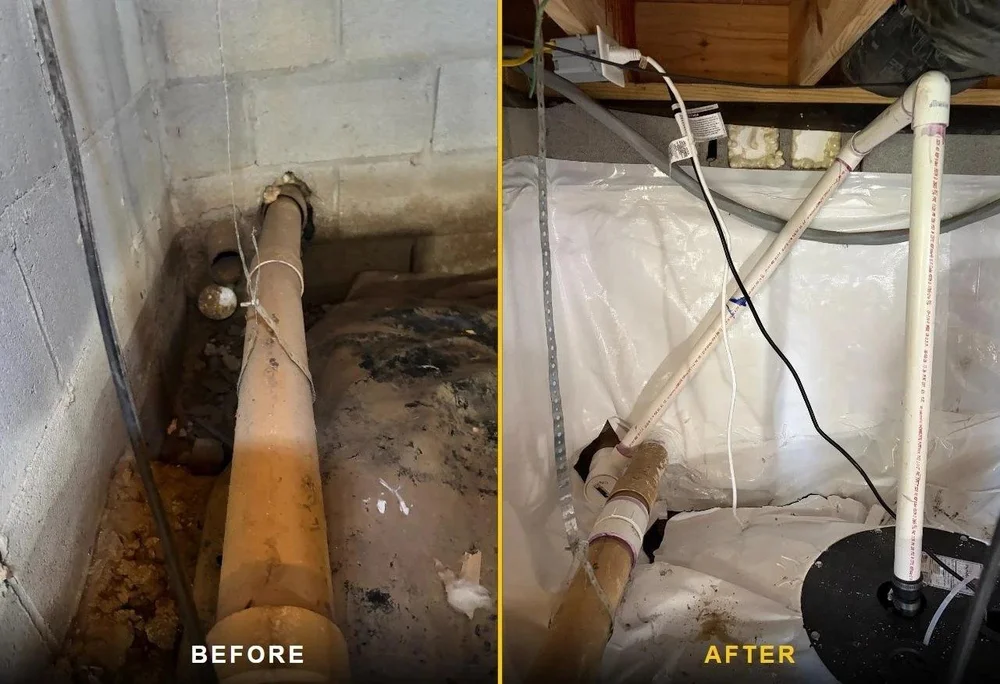
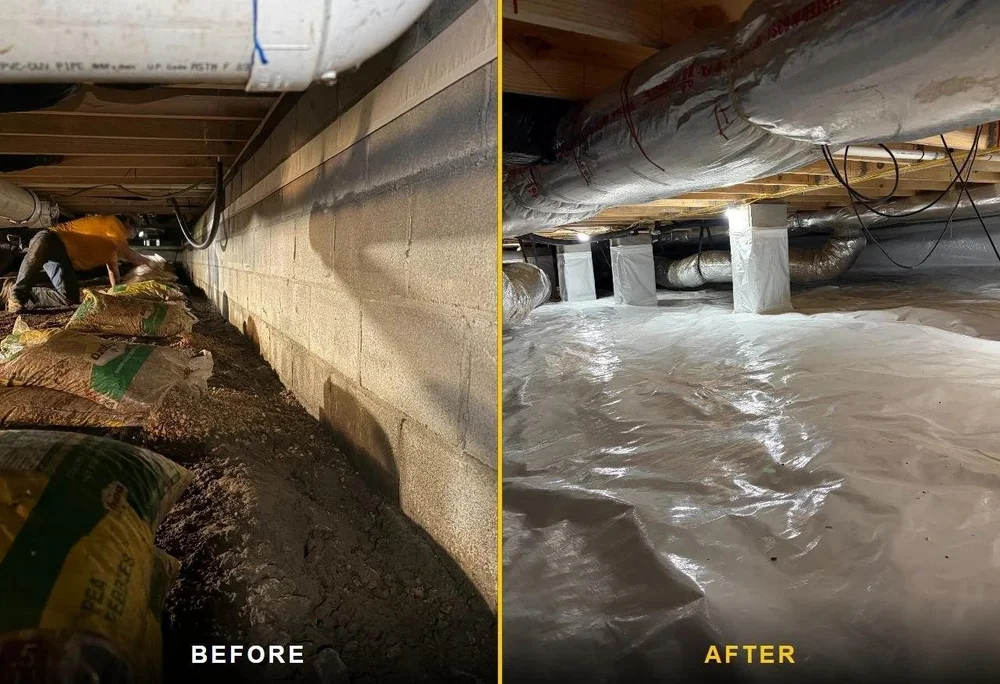
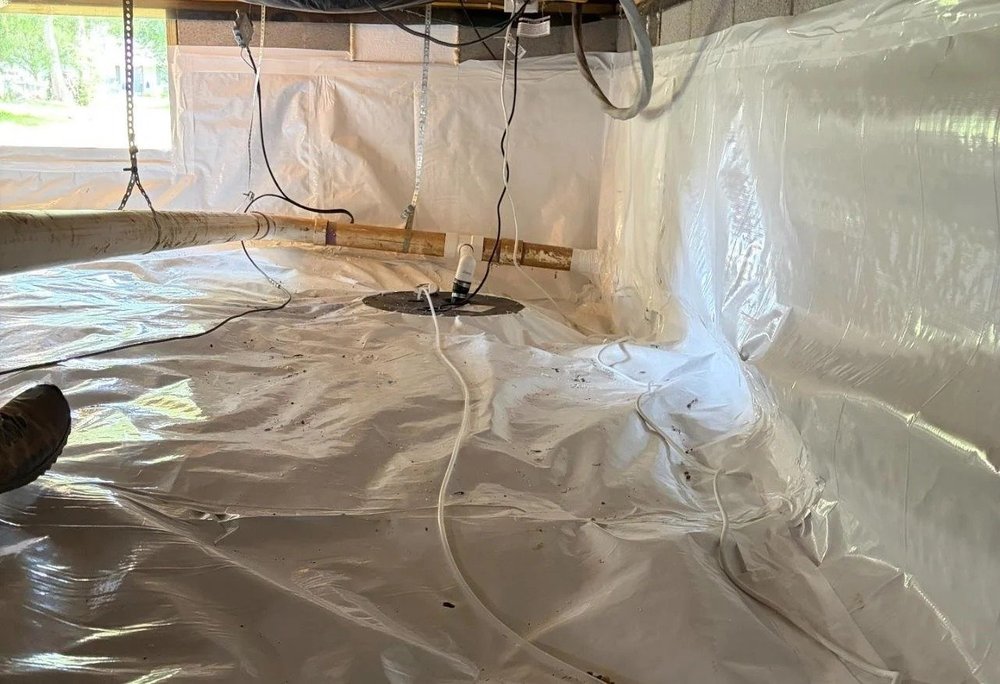
Standing water, mud and soaked insulation, turned into a clean, dry, sealed crawl space with somewhere for the water to go.