
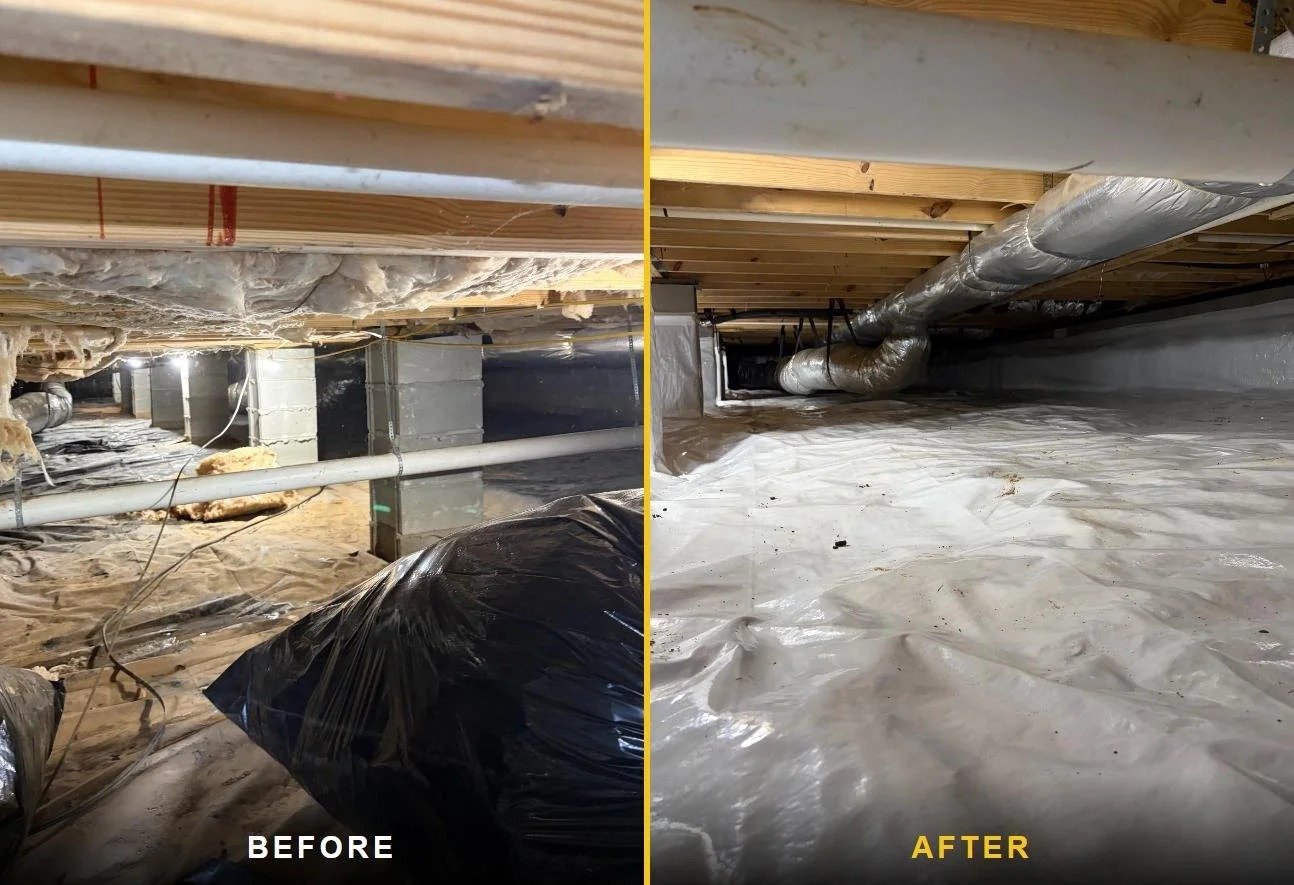
A vapor barrier is one component. Encapsulation is the whole system. A vapor barrier is sheeting laid over the crawl space floor to slow moisture rising out of the ground. Encapsulation seals the crawl space off from the outside entirely: a heavy reinforced liner across the floor and up the walls, seams and piers sealed, foundation vents closed, drainage handled, and a dehumidifier holding the humidity steady. In Middle Tennessee a barrier alone often is not enough, because most of our moisture problem arrives as humid outside air through the vents, not just as vapor from the soil.
The difference in one table
| Vapor barrier | Full encapsulation | |
|---|---|---|
| Material | Typically thinner poly sheeting | Reinforced liner, commonly 12 to 20 mil |
| Coverage | Floor only, often loose laid | Floor and walls, seams taped, piers wrapped |
| Foundation vents | Left open | Sealed |
| Humidity control | None | Dehumidifier sized for the space |
| Water intrusion | Not addressed | Drainage and sump as needed |
| Typical Middle TN price | From about 2,500 dollars | About 4,000 to 15,000 dollars |
| Best for | Dry crawl spaces with no odor, no standing water, no pest history | Damp or vented crawl spaces, musty odor, cold floors, recurring pests |
What a vapor barrier actually does
Bare soil in a crawl space is constantly giving off water vapor. Even ground that looks dry underfoot is doing it. A vapor barrier puts a plastic membrane between that soil and the air in your crawl space, which cuts the largest single moisture source.
That is real and useful work. The problem is what it leaves untouched. It does nothing about the humid air coming through the foundation vents, nothing about liquid water finding its way in after a storm, and nothing about humidity that is already in the space. Loose-laid sheeting also gets walked on, pulled up by pests and torn by anyone working under the house, so a barrier installed twenty years ago is frequently in pieces by the time we see it.
What encapsulation adds
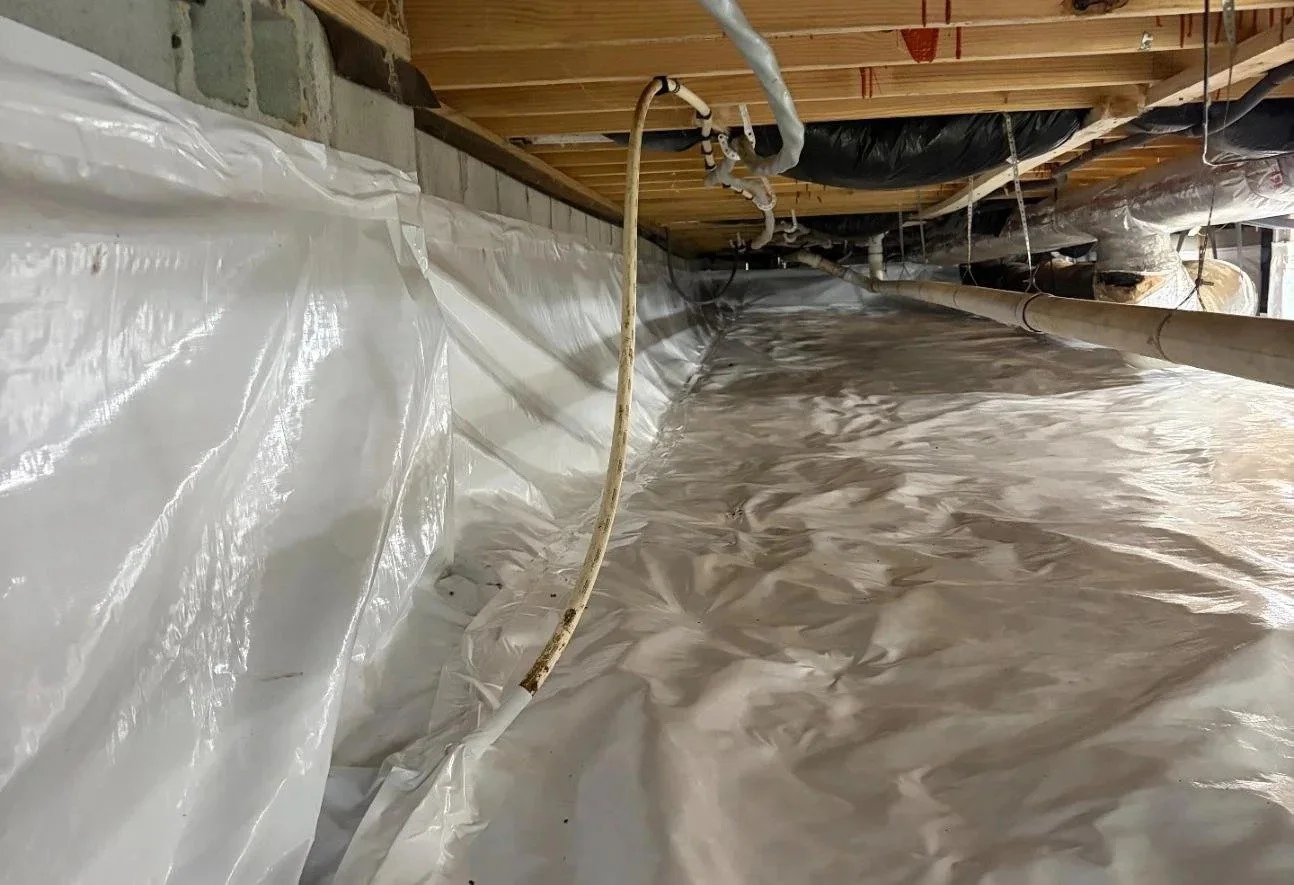
- Wall coverage and mechanical attachment. The liner runs up the foundation walls and is fastened and sealed, so the barrier is continuous instead of a floor mat.
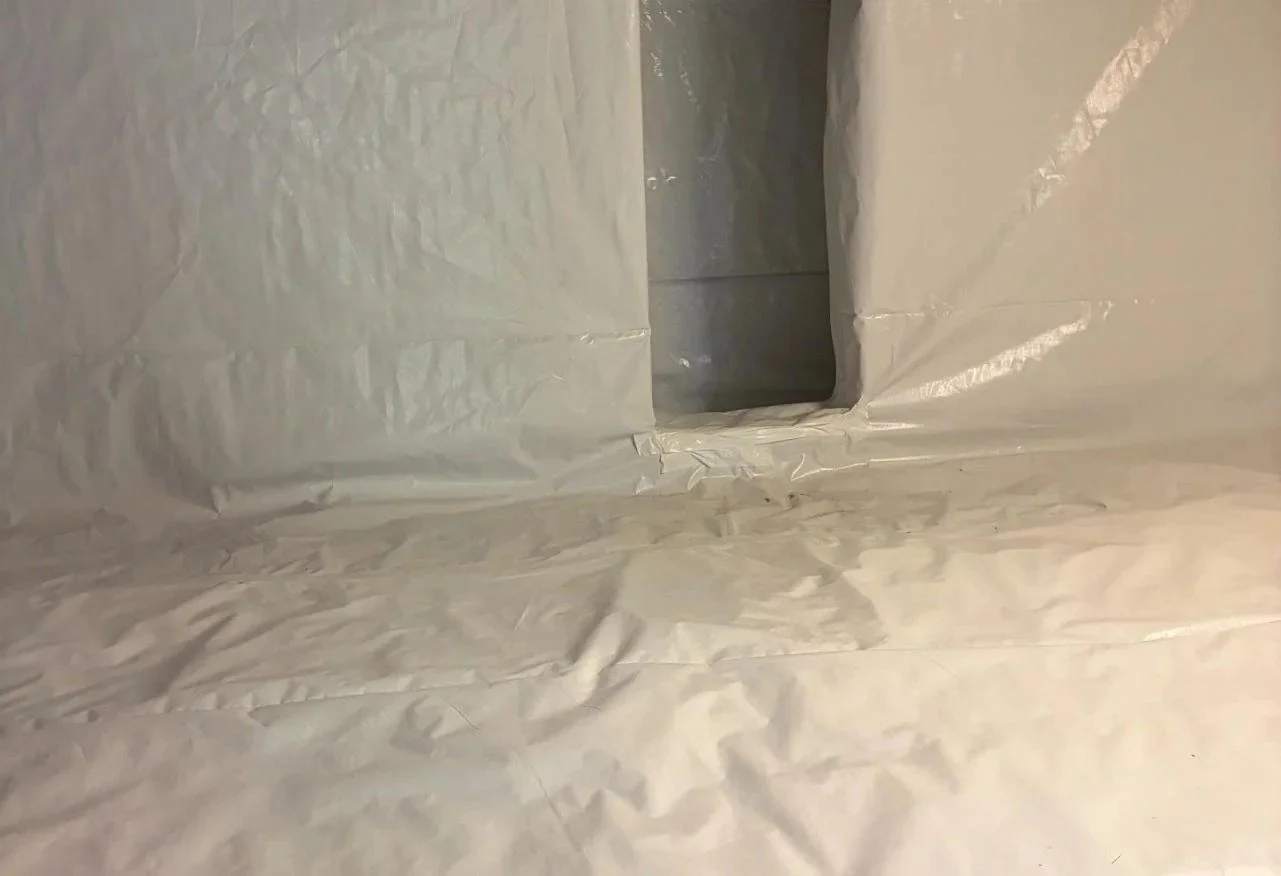
- Sealed seams and wrapped piers. Every seam is taped and every pier is wrapped, which is what turns separate sheets into one membrane.
- Sealed foundation vents. This is the piece people argue about, and it is the piece that matters most in our climate. See below.
- A dehumidifier. Once the space is sealed, a dehumidifier can actually hold a target humidity instead of fighting an open window.
- Drainage. If liquid water gets in, it needs a path to a sump pump and out, underneath the liner.
Why open vents make things worse here
Foundation vents were designed on the assumption that outside air is drier than crawl space air. In Middle Tennessee, for a good part of the year, the opposite is true. From roughly June into September our outdoor dew point regularly sits in the high 60s and low 70s. The crawl space is one of the coolest parts of the house. Push that warm, moist air across cool ductwork, cool plumbing and cool framing and it condenses.
That is the mechanism behind the classic Middle Tennessee crawl space: dry-looking dirt, wet ductwork, rusty strapping, sagging insulation and a musty smell that shows up in the house every summer. Laying plastic on the floor and leaving the vents open addresses one source and ignores the other.
Is a vapor barrier ever the right call?
Yes. We install barrier-only jobs regularly, and we will tell you when that is the right scope. It usually fits when the crawl space is genuinely dry, the framing reads dry, there is no odor in the house, there is no drainage problem, and the budget matters. It is a real improvement over bare dirt and it is a legitimate stopping point.
Where it is the wrong call is when it is sold as a fix for a problem it cannot fix. If there is standing water, a barrier hides it. If the house smells musty, a barrier alone will usually not clear it. If insulation is falling and the wood is damp, the moisture load is already beyond what floor sheeting can carry.
Can you upgrade a vapor barrier to encapsulation later?
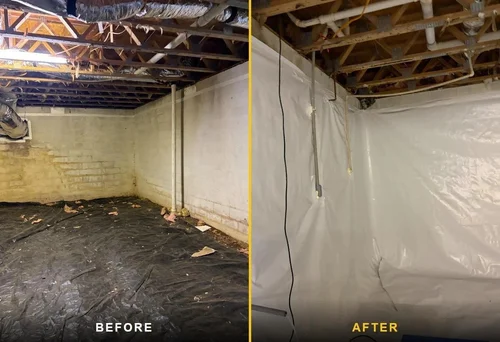
You can, and people do. Understand that most of the barrier itself gets replaced rather than reused, because encapsulation liner is heavier and has to run up the walls and around the piers as one continuous membrane. What carries forward is the cleanout and any drainage already in place. If you think you will want the full system within a few years, it is usually cheaper to do it once.
Which one does your crawl space need?
The honest answer is that it depends on what is under there right now, and you cannot tell from the driveway. We do a free inspection, photograph what we find, and give you a written estimate before we leave. If a barrier is all you need, that is what the estimate will say.


Want to know which one your house needs? Free inspection, photos of what is actually down there, written estimate before we leave the driveway.
Frequently asked questions
Is a vapor barrier the same as encapsulation?
No. A vapor barrier is floor sheeting that slows moisture from the soil. Encapsulation is a sealed system that includes a heavier liner on the floor and walls, sealed seams and piers, sealed foundation vents, drainage and a dehumidifier.
How thick should a crawl space vapor barrier be?
Thin builder poly tears easily and rarely survives foot traffic. Encapsulation liner is typically in the 12 to 20 mil range and is reinforced, which is why it holds up when someone has to crawl over it to service the HVAC.
Will a vapor barrier alone stop the musty smell?
Usually not on its own. Musty odor generally means the air in the crawl space is holding moisture, and that air moves up into the house. Controlling it normally takes sealing the vents and running a dehumidifier as well.
Do I have to seal my foundation vents?
For a true encapsulation, yes, and the sealed space then needs a means of moisture control. Leaving vents open while sealing the floor gives up most of the benefit in our climate.
What does each option cost in Middle Tennessee?
Vapor barrier work starts around 2,500 dollars. Full encapsulation generally runs 4,000 to 15,000 dollars depending on size, cleanout, drainage and structural needs. Full detail is on our cost page.
