
In Middle Tennessee, closed, but only as part of a sealed system. Opening and closing foundation vents with the seasons is folk advice left over from an era before anyone measured what was happening under houses. In a humid climate like ours, open vents in summer bring in the moisture they were supposed to remove. The right answer is either leave them fully vented and accept the humidity, or seal them permanently and add a ground vapor barrier and moisture control. What does not work is half of each.
Why foundation vents exist at all
The original logic was straightforward: moisture rises out of the dirt floor, so give it a way out and let outside air carry it away. That works if the outside air is drier than the crawl space air. In a dry climate it often is.
Middle Tennessee is not a dry climate. From roughly June through September our outdoor dew point regularly sits in the high 60s and low 70s. The crawl space, shaded and in contact with the earth, is one of the coolest parts of the house. Warm humid air entering a cool space does not dry it. It condenses in it.
What that looks like under a real house
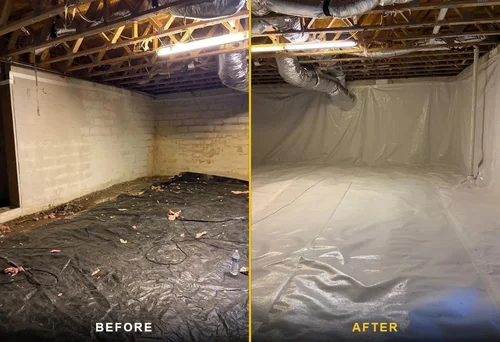
This is the pattern we photograph over and over in Murfreesboro, Smyrna and across the region:
- Beads of water on cool ductwork and on the underside of the subfloor in July and August
- Fiberglass batts that have soaked up moisture, gained weight and fallen out of the joist bays
- Rust on duct strapping, hangers and any exposed metal
- Surface mold on joists and band boards, especially near the vents themselves
- A musty smell in the house that gets worse when the air conditioning runs
Notice where the worst of it usually is. Near the vents. That is the tell.
The seasonal open and close routine
Plenty of people in Tennessee were taught to open vents in spring and close them before the first freeze. The freeze part has a real basis: closing vents in winter reduces the chance of frozen pipes and cold floors. The spring part is where it goes wrong, because that is exactly when our dew points start climbing.
So the traditional routine gets it backwards relative to moisture. It closes the crawl space when outside air is driest and opens it when outside air is wettest.
| Approach | Summer result | Winter result |
|---|---|---|
| Vents open year round | Humid air condenses on cool surfaces | Cold floors, higher pipe freeze risk |
| Open in summer, closed in winter | Worst case for moisture | Better for pipes |
| Vents blocked, nothing else done | Trapped moisture with no way out | Warmer, but still damp |
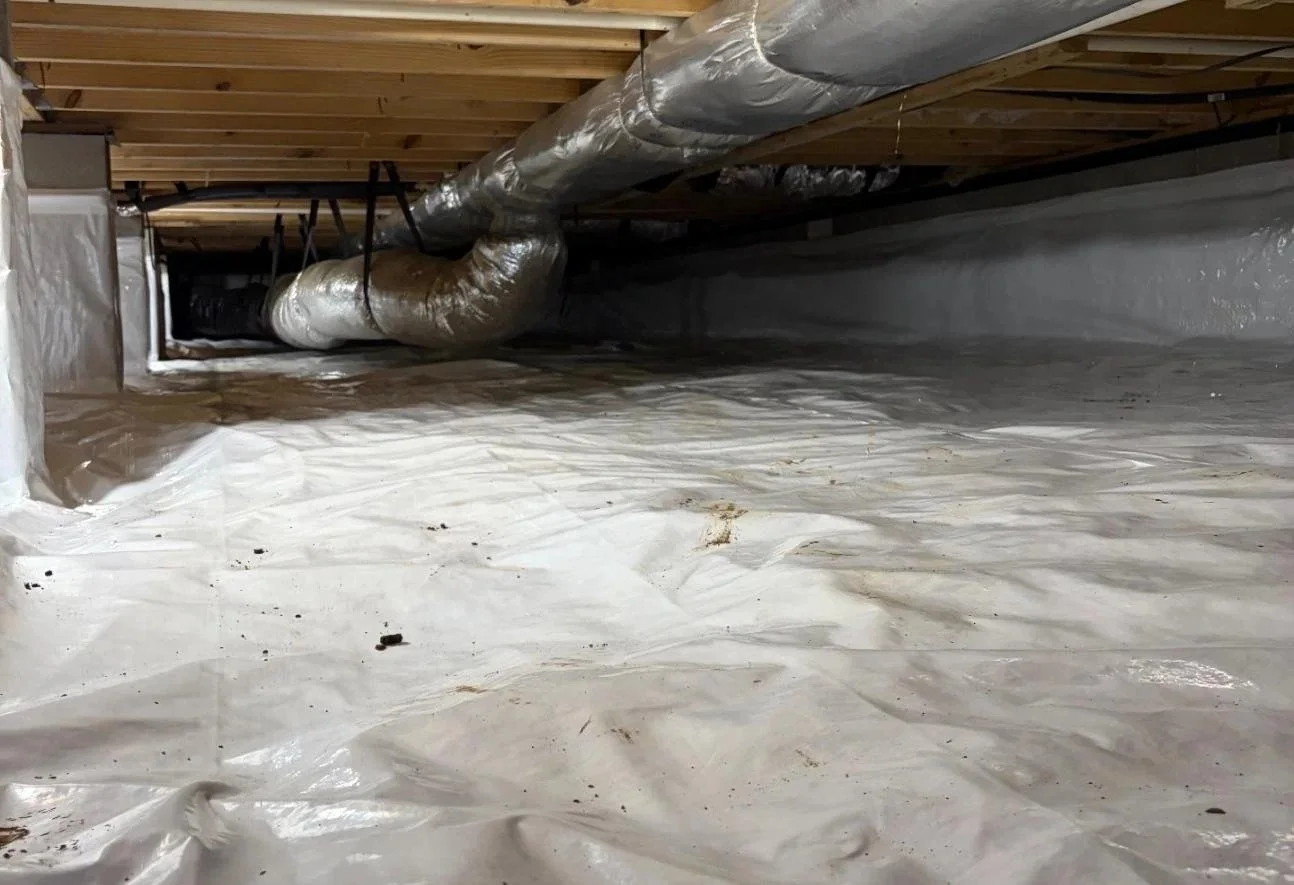
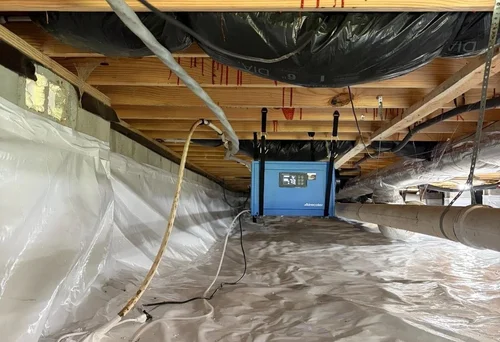
| Sealed system: liner, sealed vents, dehumidifier | Humidity held in range | Warmer floors, no freeze exposure through vents |
Can you just block the vents?
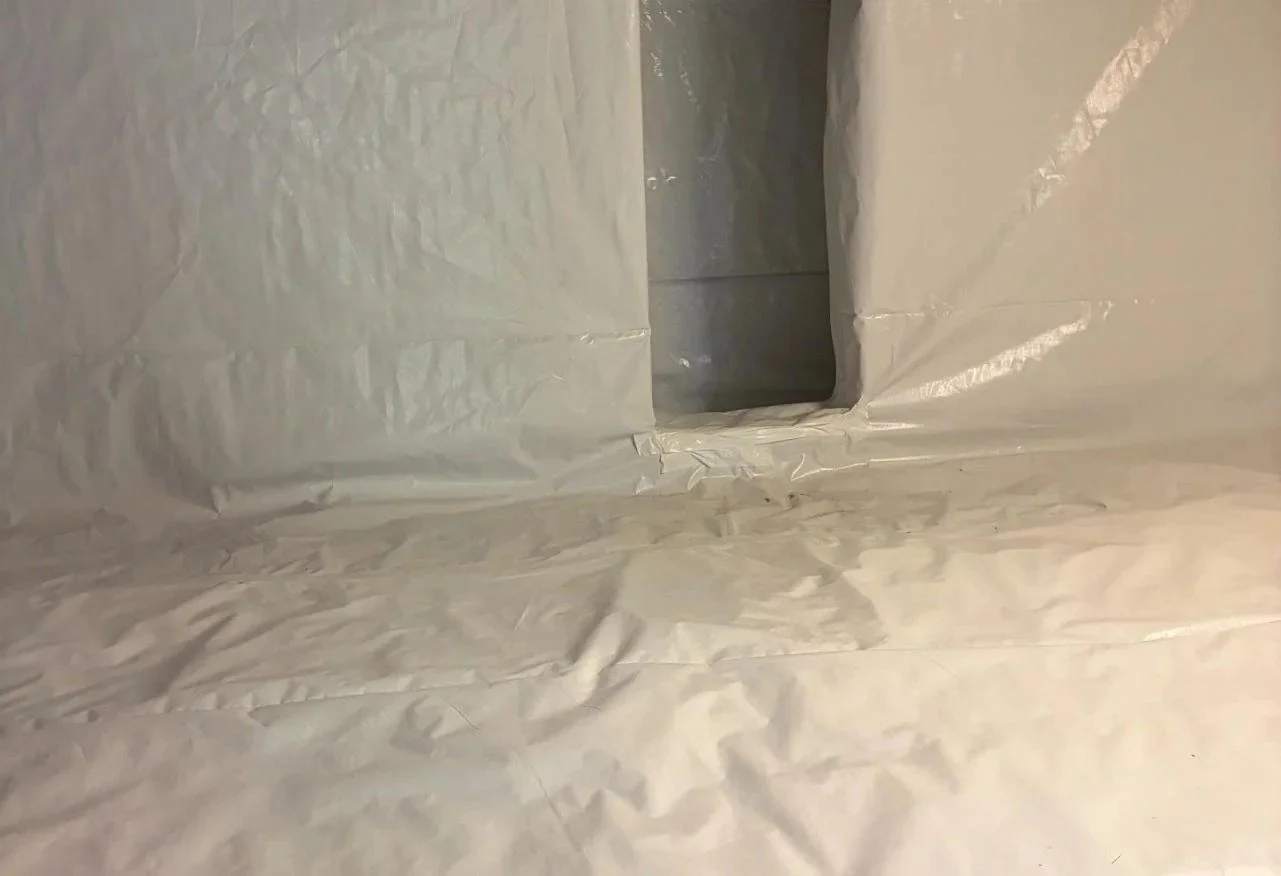
No, and this is the mistake that does real damage. Foam blocks or covers stop air exchange, but they do not stop water vapor coming up out of the soil. You end up with a closed space that is still generating moisture and now has nothing carrying it away. That is worse than leaving it vented.
Sealing vents is the last step of a sequence, not the first. The order is: clear the space, fix any water intrusion and drainage, install a continuous vapor barrier across the floor and up the walls, then seal the vents, then control humidity with a dehumidifier.
Is a closed crawl space allowed by code in Tennessee?
Yes. Unvented, closed crawl spaces are a recognized construction method in the residential code, alongside the traditional vented approach. The code does not simply allow you to block the vents, though. It expects a closed crawl space to have a continuous ground vapor retarder and a means of handling moisture, such as conditioned air supplied to the space or a dehumidifier. Local jurisdictions across Middle Tennessee adopt and amend the residential code on their own schedules, so if permitting matters for your project, confirm the current adopted edition with your county or city building department.

What about combustion appliances?
If there is a gas appliance in or drawing air from the crawl space, sealing it changes the air supply situation and has to be handled deliberately. This is one of several reasons a sealed crawl space should be done by someone who will look at the whole picture rather than just covering openings.
What we do
We seal vents as part of a full encapsulation, never on their own. If your crawl space is not ready for a sealed system yet, we will tell you what has to happen first rather than covering the vents and leaving.
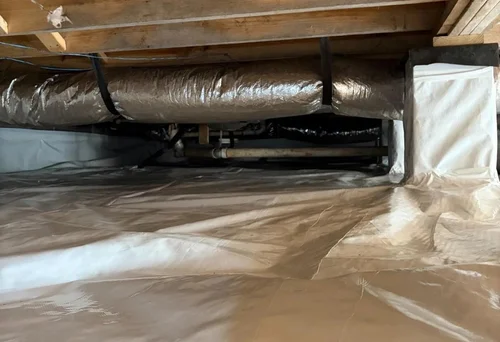

Sweating ducts: a leak, or condensation?
Ductwork that drips in summer is one of the most common things homeowners call us about, and it is almost never a leak. It is condensation, and it is the vented crawl space doing exactly what the physics dictate.
Middle Tennessee summer air carries a lot of moisture. When that air comes through the foundation vents into a crawl space ten or fifteen degrees cooler, it cannot hold what it is carrying, and the water condenses onto the coldest surfaces available. That is usually your ductwork, your cold water lines and the underside of the subfloor. The vents meant to dry the space are delivering water into it instead, every day from May through September.
Telling the two apart
Condensation is spread evenly across every cool surface in the space, and it comes and goes with the weather. A leak is concentrated in one spot, runs regardless of humidity, and leaves a stain trail pointing back to its source. If the whole crawl space is damp during a humid week and dry during a cool one, it is condensation.
Other signs of the same mechanism: insulation sagging or falling because wet fiberglass gets heavy, rust on duct straps and nail plates, and dark staining on the subfloor where mold is establishing.
Does sealing the vents change your radon?
It is a fair question and it comes up on nearly every sealed-crawl-space job. Radon comes up out of the soil, and a dirt crawl space with open vents is, in effect, venting some of it outdoors before it reaches your living room.
In practice, a properly encapsulated crawl space usually lowers indoor radon rather than raising it: a sealed liner across the floor and up the walls is a barrier the gas has to get through, where bare dirt is not. But "usually" is doing real work in that sentence, because sealing also changes how air moves between the crawl space and the house. The honest answer is that it should be measured, not assumed. A radon test before the work and another one after costs very little next to the job itself, and if the number does come back high, a passive stack can be built into the encapsulation while the crew is already under there rather than added later.
Wondering whether your vents are helping or hurting? We will get under the house, measure the humidity, photograph what we find, and leave a written estimate. Free.
Frequently asked questions
Should crawl space vents be open or closed in Tennessee?
Closed, but only as part of a sealed system that includes a continuous ground vapor barrier and moisture control. In our humid summers, open vents bring moisture in rather than carrying it out.
Is it bad to just cover my crawl space vents?
Yes. Blocking vents without a ground vapor barrier and a way to control humidity traps moisture that is still rising out of the soil. That is worse than leaving the vents open.
Should I close crawl space vents in winter?
Closing them in winter reduces cold floors and pipe freeze risk, which is why the practice exists. The problem is reopening them in summer, when outdoor air is at its most humid.
Is a closed crawl space legal in Tennessee?
Unvented, closed crawl spaces are a recognized method in the residential code, provided the space has a continuous ground vapor retarder and a means of moisture control. Adopted code editions vary by local jurisdiction, so confirm with your county or city building department.
Do sealed vents cause moisture to get trapped?
Only if the vents are sealed without the rest of the system. With a continuous liner stopping soil vapor and a dehumidifier removing what remains, a sealed crawl space stays drier than a vented one.
Keep reading: Do you need a dehumidifier after encapsulation? and encapsulation vs. vapor barrier.
