
A floor that bounces, dips or feels soft is usually telling you something in the crawl space has lost support. The four common causes are joists weakened by moisture or rot, a girder or beam that has sagged, piers that have settled or were never properly shimmed, and undersized or overspanned framing from the original build. Bounce alone is often a stiffness issue and not urgent. A visible dip, a crack that keeps opening, or a door that will no longer latch means something is still moving, and that is worth looking at now.
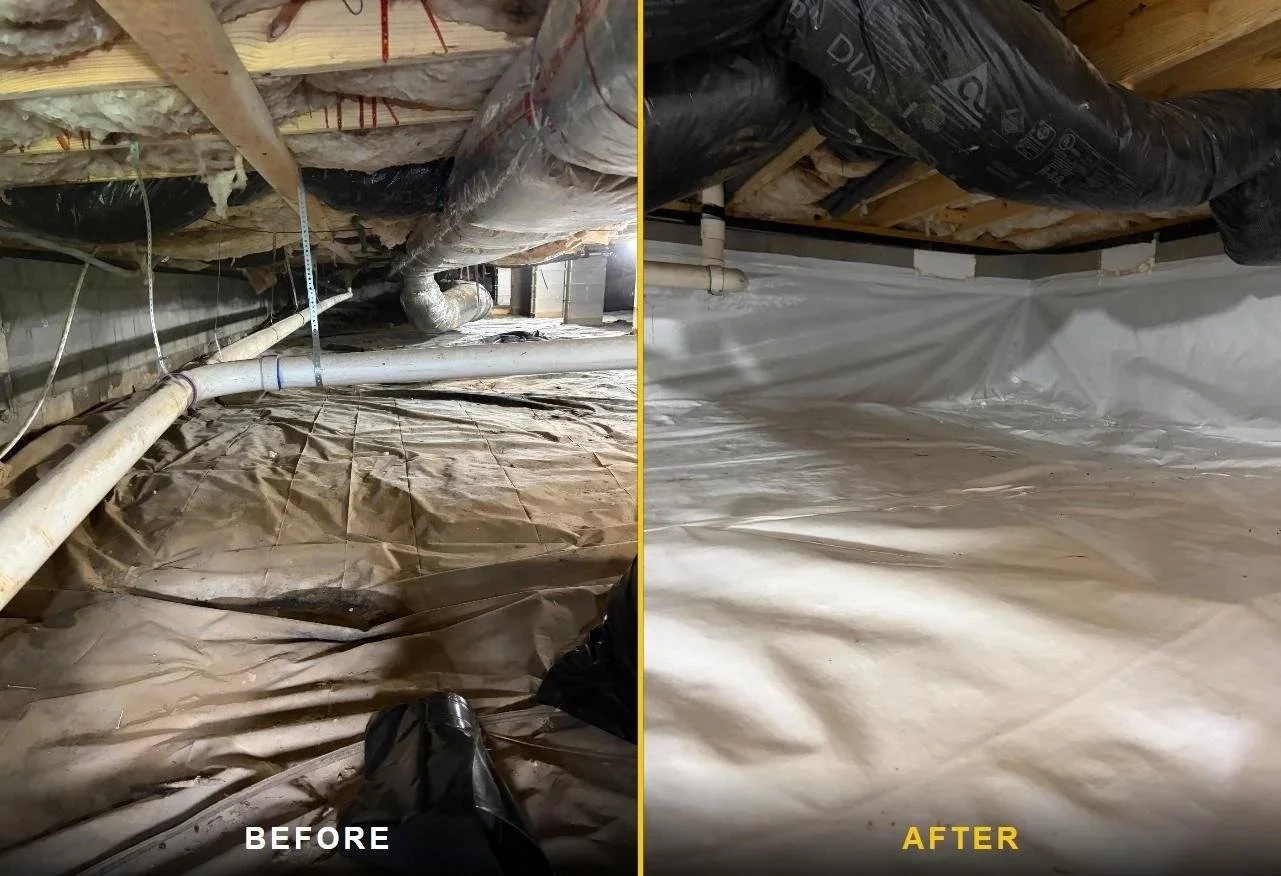
Bounce versus sag, and why the difference matters
They feel similar from upstairs and they are not the same problem.
Bounce is deflection. The floor flexes under load and springs back. It usually means the joists are at or beyond a comfortable span for their size, or a girder is carrying more than it should between supports. It is common in older houses and in additions, and by itself it is a comfort issue rather than a safety one.
Sag is permanent deformation. The floor has moved and stayed. That means something below has lost capacity or lost bearing: rotted joist ends, a crushed or split girder, a pier that has settled into soft ground, or shims that have compressed or fallen out.
The four things we usually find
| Cause | What it looks like from below | Typical fix |
|---|---|---|
| Moisture-damaged joists | Dark, soft or spongy wood, usually near the band board, exterior walls or under bathrooms | Sister new lumber alongside the damaged joist |
| Sagging girder or beam | A visible dip in the main beam between piers, sometimes split along the grain | Additional support point, new pier or column, and jacking |
| Settled or failed piers | Gaps at the top of a pier, fallen shims, pier leaning or sunk into wet soil | Rebuild or replace the pier on an adequate footing |
| Overspanned original framing | Nothing broken, joists simply undersized for the span | Add a support beam and columns to shorten the span |
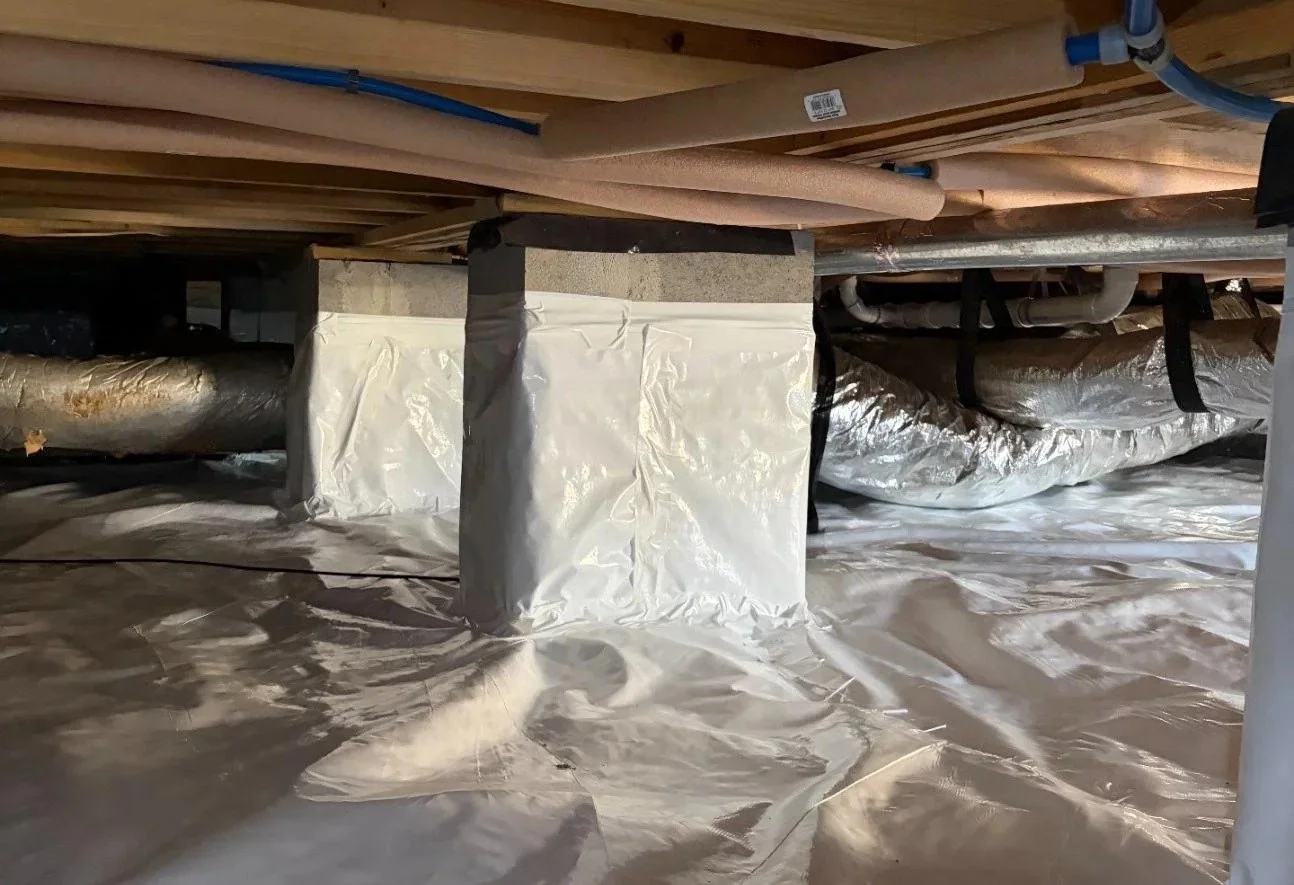
Why moisture is behind so much of it
Wood loses strength as it takes on moisture, and wood that stays above roughly 20 percent moisture content is in the range where decay fungi can get established. Decay does not need a leak. In Middle Tennessee it mostly comes from condensation and from vapor rising out of clay soil, which is the same mechanism described in why Middle Tennessee crawl spaces stay wet.
This is why structural repair and moisture control belong in the same conversation. Sistering a rotted joist in a crawl space that is still damp buys time, not a solution. The new lumber is in the same environment that destroyed the old lumber.
Signs it is worth looking at now
- A dip you can see across the room, or a ball that rolls to the same spot
- A soft or spongy area, especially near a bathroom, kitchen or exterior wall
- Interior doors that will not latch, or gaps opening at the top or bottom of a door
- Drywall cracks at door corners that keep reopening after being patched
- Gaps appearing between the baseboard and the floor
- Anything you can see from the crawl space: a beam that dips, a pier with a gap at the top, fallen shims
Signs it is probably not urgent
A floor that bounces when someone walks across it but shows no dip, no cracks and no door problems is usually a stiffness issue. It can still be improved, and adding support under an overspanned area makes a noticeable difference in how a house feels. It just is not an emergency.
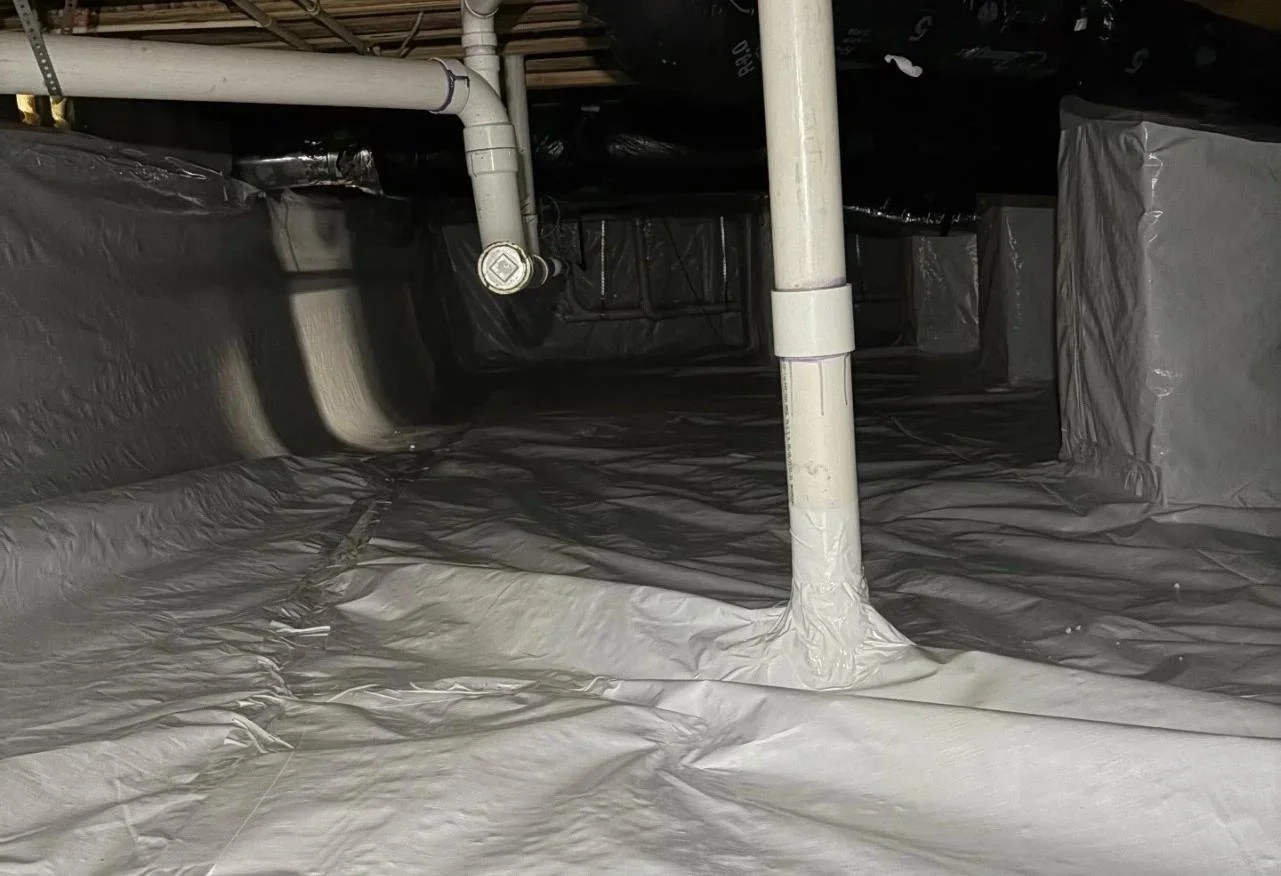
How the repair is done
- Establish what is actually moving. Look at the joists, the girder, the piers and the bearing points, and check the wood for moisture and decay rather than assuming.
- Deal with the water first. Grading, downspouts, and where needed drainage and a sump pump.
- Repair the structure. Sister joists, add or rebuild piers, add support columns and lift slowly where lifting is appropriate.
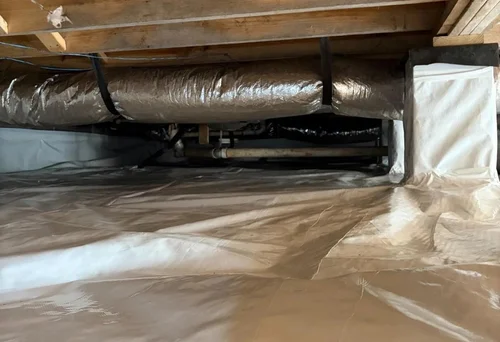
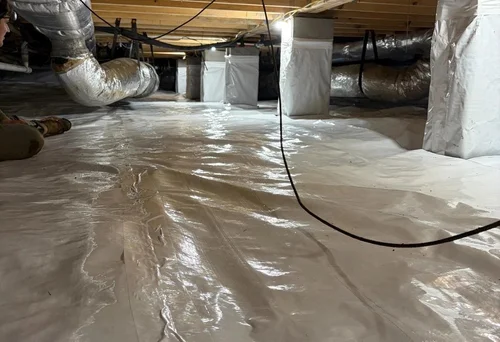
- Keep it dry permanently. Vapor barrier, sealed vents and a dehumidifier, so the repair lasts.
Sister joist repairs in our area run around 800 dollars per joist. Pier and beam work is priced by what is actually needed, which is why we photograph everything and give you a written number rather than a range over the phone.
One honest caveat
Not every uneven floor is a crawl space problem, and not every old house needs to be made perfectly flat. Houses settle. The question is whether it is still moving, and whether wood is deteriorating. That is what an inspection answers.
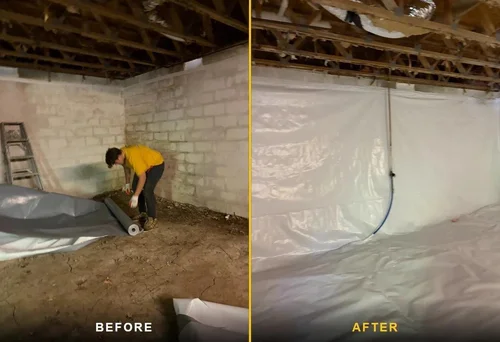

Got a soft spot or a bounce you do not like? We will get under there, photograph the framing, and tell you honestly whether it needs work.
Frequently asked questions
Why is my floor bouncy over a crawl space?
Usually the joists are at or beyond a comfortable span for their size, or a girder is carrying too much between supports. Bounce with no dip, cracks or door problems is generally a stiffness issue rather than a safety one.
Is a sagging floor dangerous?
A visible dip means something below has lost capacity or bearing, which is worth evaluating. Whether it is urgent depends on whether it is still moving and whether the wood is decaying.
What does it cost to fix sagging floors from the crawl space?
Sister joist repairs in Middle Tennessee run around 800 dollars per joist. Pier, girder and support column work is priced by what the specific house needs.
Can moisture cause sagging floors?
Yes. Wood loses strength as it takes on moisture, and wood held above roughly 20 percent moisture content is in the range where decay fungi can establish and weaken joists and girders.
Should I fix the structure or the moisture first?
Address water intrusion first, then repair the structure, then keep the space dry permanently. Repairing framing in a crawl space that stays damp puts new lumber into the same conditions that damaged the old.
