
In Middle Tennessee, almost always yes. Sealing the crawl space stops new moisture from getting in, but it does not remove the moisture already there, and it does not remove what the house itself adds through plumbing, the ground and normal air exchange. Without a dehumidifier a sealed crawl space can actually hold humidity longer than a vented one, because the moisture has nowhere to go. A properly sized crawl space dehumidifier holds the space in a safe range year round, which is the point of sealing it in the first place.
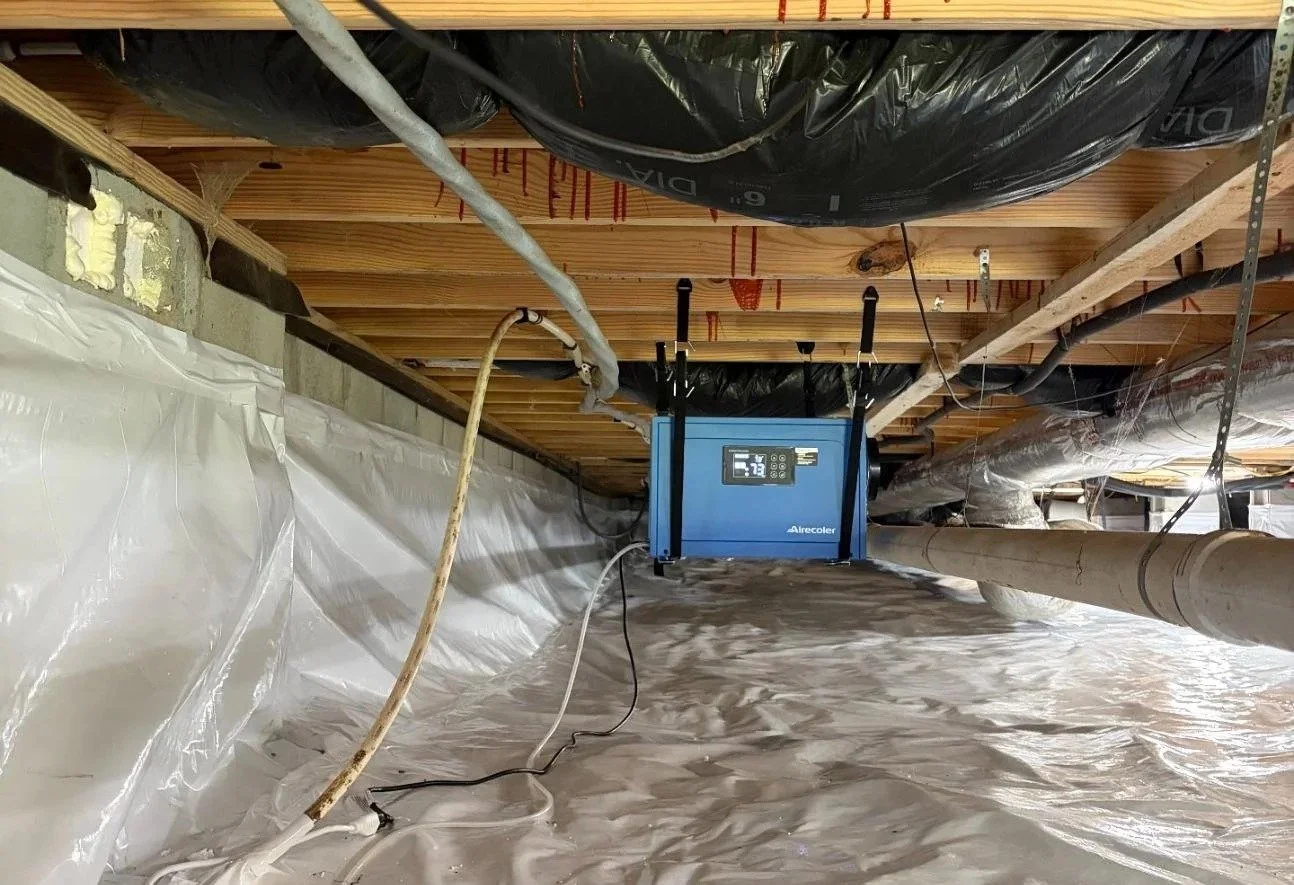
What sealing does and does not do
Encapsulation removes the two big moisture inputs: vapor coming up out of the soil, and humid outside air coming through the foundation vents. That is most of the problem. It is not all of it.
What is left over is smaller but constant. Water vapor still diffuses through masonry. Plumbing sweats. The space still exchanges some air with the house above it. After a hard rain, moisture in the surrounding soil rises. And on the day the liner goes down, the crawl space is still holding whatever humidity it had that morning, plus whatever was in the framing.
A sealed space with no dehumidifier has no mechanism to shed any of that. It is a box.
What humidity level are you aiming for?
The working target for a closed crawl space is generally in the 50 to 60 percent relative humidity range. Below that and you are spending energy for no additional benefit. Above roughly 60 to 65 percent, sustained, and you are back in the range where mold can establish on organic surfaces and where wood moisture content starts to climb.
| Crawl space RH | What it means |
|---|---|
| Under 50 percent | Drier than necessary. Fine, but you are paying for it. |
| 50 to 60 percent | The target range for a sealed crawl space. |
| 60 to 70 percent | Drifting. Mold risk rises on organic surfaces over time. |
| Over 70 percent sustained | Active problem. Expect odor, and eventually surface growth. |
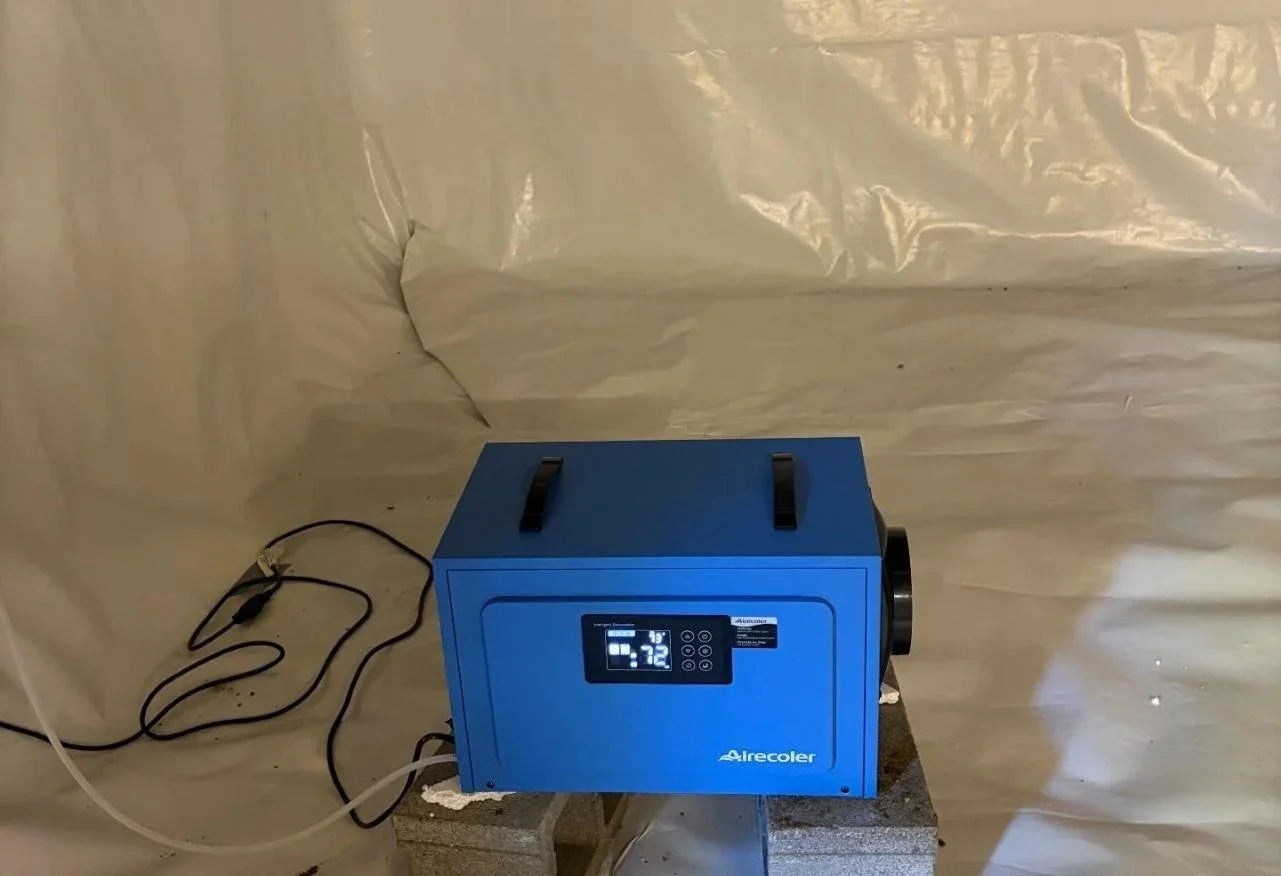
Why a household dehumidifier is not the same thing
People try this, and it is an understandable instinct. The differences matter:
- Drainage. A store dehumidifier fills a bucket. Nobody is going to crawl under the house every other day to empty it. A crawl space unit drains continuously by gravity or condensate pump.
- Low temperature operation. Crawl spaces run cool. Many portable units lose capacity or ice up at crawl space temperatures.
- Capacity and duty cycle. A crawl space unit is built to run in a damp, cool, dusty environment for years. Portable units are not, and they fail there.
- Being ignored. The best thing about a properly installed unit is that once it is set, you stop thinking about it.
More on the equipment we install is on our crawl space dehumidifier page.
Are there cases where you can skip it?
A few, and we will say so when we see them. If the crawl space is small, the soil is genuinely dry, the site drains well, and you are willing to monitor humidity with a cheap wireless sensor for the first year, a barrier-plus-sealed-vents job can sometimes hold on its own. Some sealed crawl spaces are instead conditioned with a small supply from the HVAC system, which is a recognized alternative approach.
What we will not do is leave a crawl space sealed with no moisture control at all and call it finished. That is the version of encapsulation that gives encapsulation a bad name.
Running cost
A crawl space dehumidifier is not free to run, but it works far less in a sealed space than it would in a vented one, because it is not fighting outdoor air. In a properly sealed crawl space the unit typically cycles rather than running continuously, and it does the most work in the humid months of summer and early fall. Any energy it uses is partly offset by the HVAC system no longer trying to condition air that is being pulled up out of a damp crawl space.

What we recommend
Seal the space properly, install a unit sized to the square footage, drain it so it never needs attention, and put a humidity readout somewhere you will actually look at it. Then check it a couple of times a year. That is the whole maintenance routine.

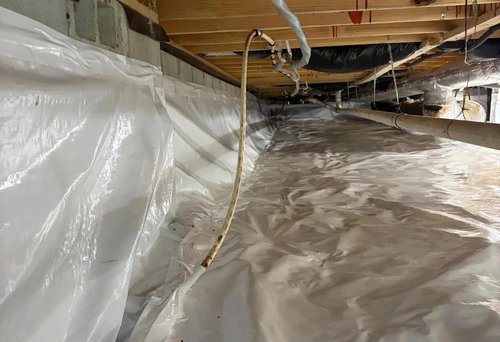
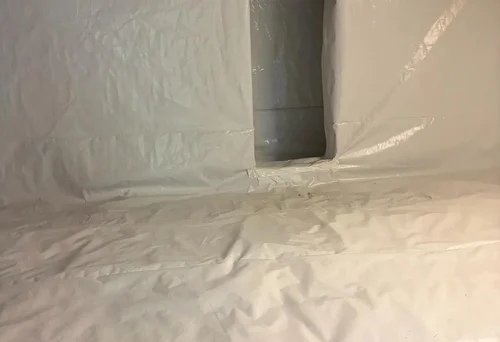

Not sure what your crawl space is holding right now? We measure it during the free inspection and show you the number, along with photos of what is under there.
Frequently asked questions
Do I need a dehumidifier after crawl space encapsulation?
In Middle Tennessee, almost always. Sealing stops new moisture from entering but does not remove what is already there or what the space continues to generate. A sized crawl space dehumidifier is what actually holds the humidity in range.
What humidity should a sealed crawl space stay at?
Generally 50 to 60 percent relative humidity. Sustained readings above roughly 60 to 65 percent are where mold risk starts to climb.
Can I use a regular household dehumidifier in the crawl space?
It rarely works long term. Household units fill a bucket instead of draining, lose capacity at crawl space temperatures, and are not built for continuous operation in a cool, dusty space.
How much does a crawl space dehumidifier cost to run?
Less than people expect in a properly sealed space, because it is not fighting outdoor air. It typically cycles rather than running constantly, and works hardest in summer and early fall.
What size dehumidifier does my crawl space need?
Sizing depends on square footage, ceiling height, how much moisture the site produces and how well the space is sealed. We size it during the inspection rather than guessing from square footage alone.
Keep reading: Encapsulation vs. vapor barrier and is encapsulation worth it in Tennessee?
