
Crawl space mold is a moisture problem wearing a costume. Cleaning or treating the growth without fixing the humidity that created it guarantees it comes back, usually within a year. The correct order is: identify where the water is coming from, correct it, remove and treat the affected material, then keep the space dry permanently with a sealed liner and humidity control. Most crawl space growth in Middle Tennessee is caused by summer condensation, not by a leak.
What crawl space mold actually looks like
People expect black spots. In crawl spaces it is more varied than that:
- White or grey fuzz on joists, band boards and the underside of the subfloor. Extremely common here.
- Dark grey or black staining, often in patches following the grain or along the edge of a joist bay.
- Yellow, olive or greenish patches, usually on wood that has stayed damp.
- Stringy white growth that looks like cobweb but does not move.
- Efflorescence on block walls, a chalky white crystalline deposit. This one is not mold. It is mineral salt left behind by water moving through masonry. It is still a moisture signal.
You cannot identify a species by looking, and for a crawl space it usually does not change what you do about it. The remediation and the prevention are the same either way.
Why it grows under Tennessee houses
Mold needs three things: an organic food source, oxygen and moisture. A crawl space provides the first two automatically. All that varies is the water.
Mold does not need standing water. It needs surface moisture, and in a crawl space that mostly comes from condensation. From June into September our outdoor dew points sit in the high 60s and low 70s, and every cubic foot of that air that comes through a foundation vent hits framing that is cooler than the dew point. Water forms on the wood. That is the whole mechanism.
Sustained relative humidity above roughly 60 to 65 percent in the crawl space is the practical threshold to watch. Above about 70 percent, expect growth on organic surfaces over time.
Can it affect the house above?
Air moves upward through a building, so crawl space air ends up in the living space. Elevated humidity and spore levels below can raise both above. Some people are noticeably sensitive to that and some are not. We are contractors, not doctors, so we will describe what we find and let a medical professional address symptoms. What we will say is that a musty smell in the house is not an air freshener problem, it is a crawl space problem.
What NOT to do
- Do not just spray it. Bleach, off-the-shelf fungicides and fogging treat the visible growth and change nothing about the conditions. It comes back.
- Do not paint over it. Encapsulating coatings applied over damp wood in a still-humid crawl space fail.
- Do not block the vents and hope. Sealing vents with no ground barrier and no humidity control traps moisture. See open or closed vents.
- Do not disturb heavy growth yourself. Scrubbing puts spores in the air in an enclosed space you are lying down in.
The order that actually works
- Find the water. Liquid intrusion, vapor from bare soil, humid air through the vents, or a plumbing or HVAC condensate leak. Usually more than one.
- Correct the intrusion. Grading, downspouts, and where needed interior drainage and a sump pump.
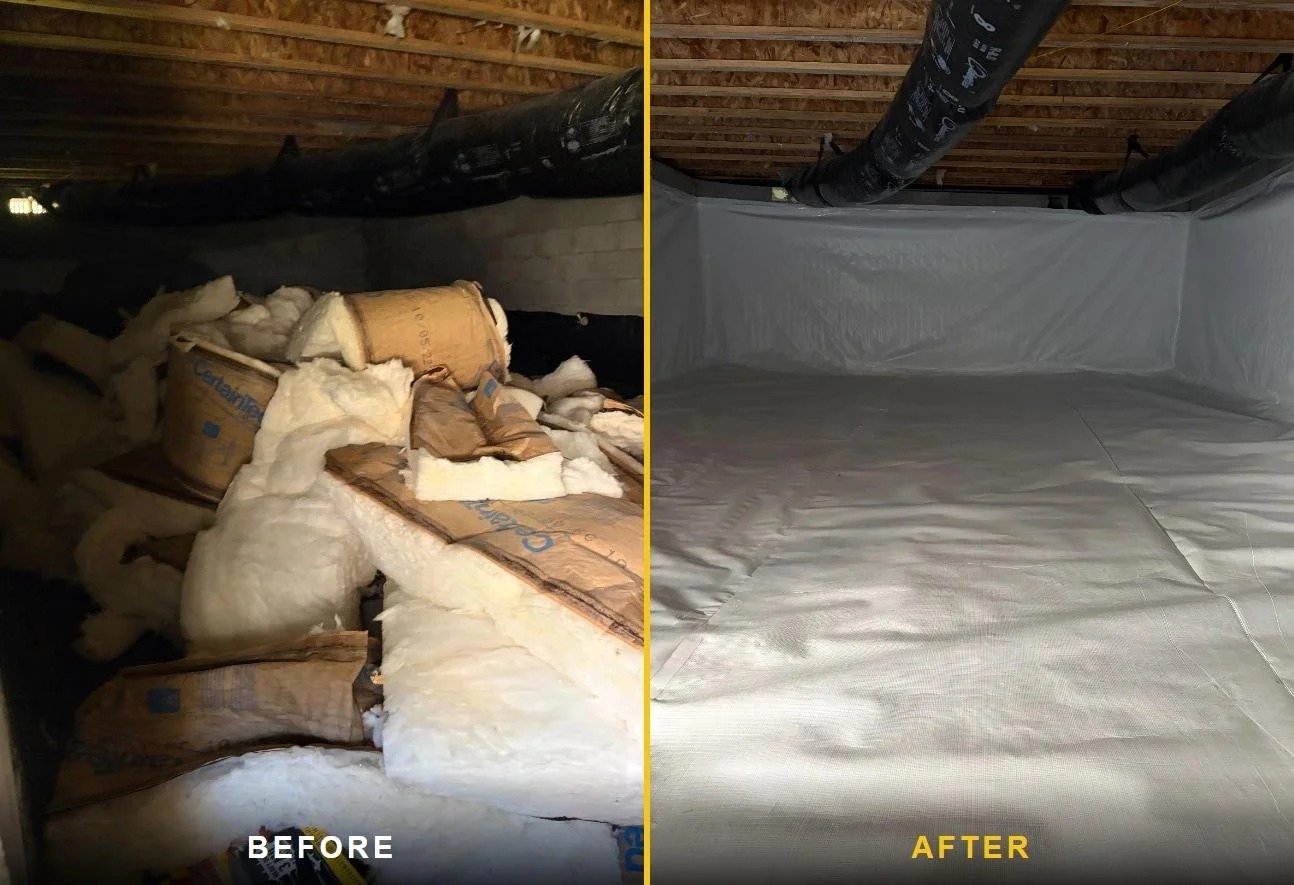
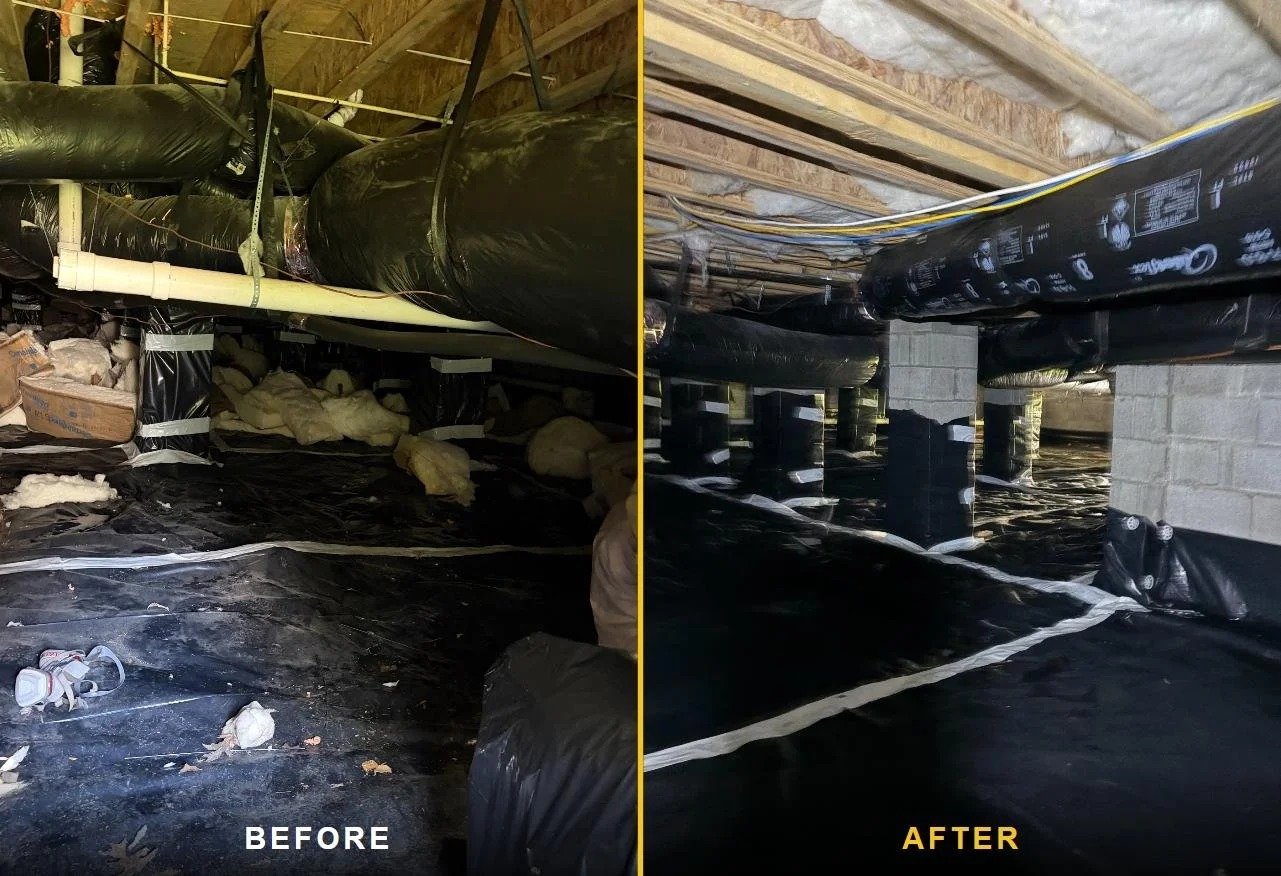
- Remove the fuel. Wet fallen insulation, buried plastic, cardboard, wood scrap and organic debris come out.
- Treat the affected framing. Cleaning and treating the wood, done once the space can actually be kept dry.
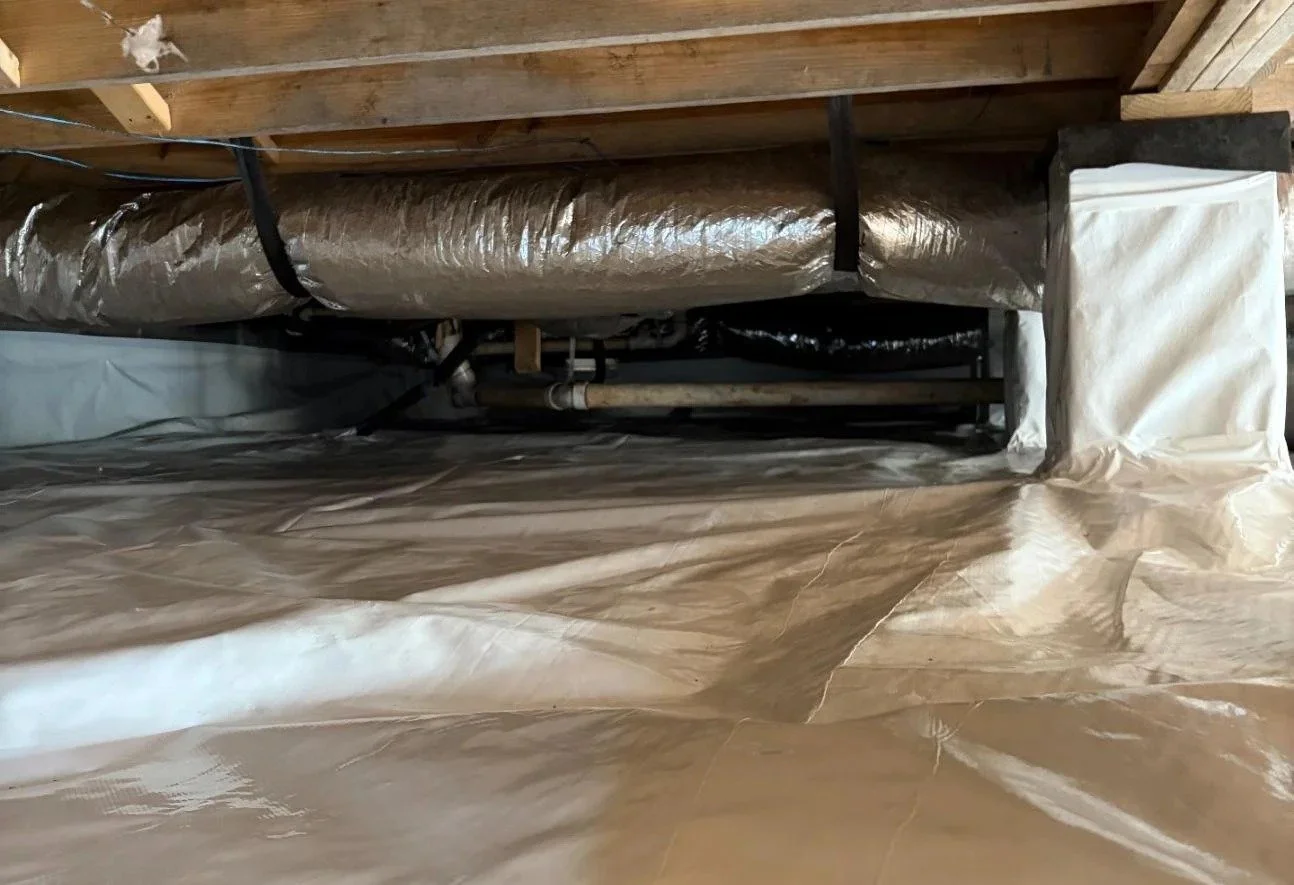
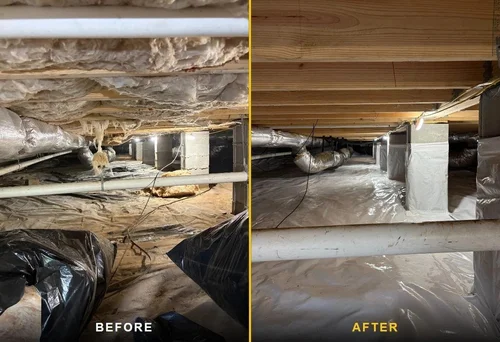
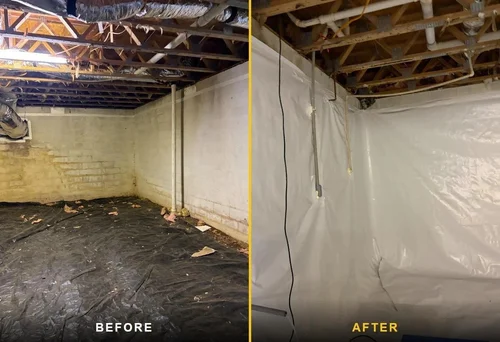
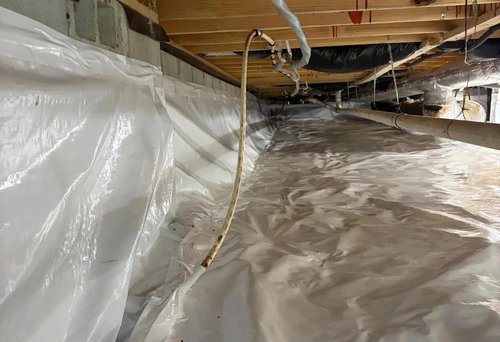
- Separate the air from the ground. Continuous liner, floor and walls, seams sealed, piers wrapped.
- Hold it dry. Sealed vents and a dehumidifier sized for the space.
Steps 1, 2, 5 and 6 are what keep it from returning. Step 4 without them is a cosmetic treatment with an expiration date.
Do you need testing?
For most crawl spaces, no. If there is visible growth and the crawl space is damp, you already know the two things that determine the scope of work. Testing is worth considering when there is a dispute in a real estate transaction, when an insurance claim depends on it, or when someone in the household has a documented medical reason to need it. Otherwise the money is better spent on the moisture control.

Found something growing under your house? Send us a photo or let us come look. Free inspection, photos of everything we find, written estimate before we leave.
Frequently asked questions
What does crawl space mold look like?
Most often white or grey fuzz on joists and the subfloor, dark grey or black staining, or yellow to greenish patches on damp wood. Chalky white deposits on block walls are usually efflorescence, a mineral salt, not mold, but they still signal moisture.
Will bleach kill crawl space mold?
It may remove surface growth, but it does nothing about the humidity that caused it, so the growth returns. Correcting the moisture is what prevents recurrence.
Is crawl space mold dangerous?
Crawl space air moves up into the living space, so elevated humidity and spore levels below can raise them above. Sensitivity varies from person to person, and anyone with ongoing symptoms should speak with a medical professional.
Do I need a mold test for my crawl space?
Usually not. If there is visible growth and the space is damp, you already know enough to scope the work. Testing is mainly useful for real estate disputes, insurance claims, or a documented medical need.
Will encapsulation stop mold from coming back?
A properly done encapsulation removes the condition mold needs, which is surface moisture. Treating the growth without controlling humidity is what allows it to return.
