
Most crawl space moisture problems announce themselves inside the house long before anyone opens the access door. The common signs are a musty smell that gets worse in summer, floors that feel cold or bouncy, doors and floors that move seasonally, higher cooling bills, recurring pests, and allergy symptoms that ease when you leave the house. Under the house, the signs are torn or missing plastic, insulation on the ground, condensation on ductwork, rust, and white or dark growth on the framing.
Signs you can spot without going under the house
1. A musty smell that is worse in summer
Air moves upward through a house. A meaningful share of the air you breathe on your first floor started in the crawl space. If it smells like a damp basement down there, that is what is coming up through the floor. If the smell tracks with the air conditioning running, that is a strong indicator.
2. Floors that feel cold, soft or bouncy
Cold floors over a crawl space usually mean the insulation has fallen or absorbed moisture. Soft or springy spots mean something structural is happening: joists losing strength to moisture, sagging girders, or piers that have settled. A bounce that shows up in the same spot every year is worth having looked at.
3. Doors and windows that stick seasonally
Wood framing that gains and loses moisture moves. If interior doors bind every summer and free up in winter, one likely explanation is the humidity under the floor changing with the season.
4. Cupping or gapping hardwood floors
Hardwood over a damp crawl space absorbs moisture from below. The boards swell at the edges and cup, or dry unevenly and gap. Refinishing without fixing the crawl space is a temporary fix.
5. Cooling bills that climb faster than they should
Humid air is expensive to cool. If your HVAC system is continually conditioning air being drawn up out of a damp crawl space, it works harder for the same comfort. Uninsulated or wet ductwork in the crawl space makes it worse.
6. Recurring pests despite treatment
Damp wood and dark, humid space is habitat. Termites, roaches, camel crickets, rodents and mold all want the same conditions. If pest treatment keeps working and then stops working, the conditions are what is being reset.
7. Allergy or asthma symptoms that ease when you leave
Not a diagnosis, and not everything is the crawl space. But when symptoms are notably better away from the house and better in winter than in summer, the crawl space is worth checking as one possible contributor among several.
Signs you will see under the house
8. Torn, missing or buried plastic
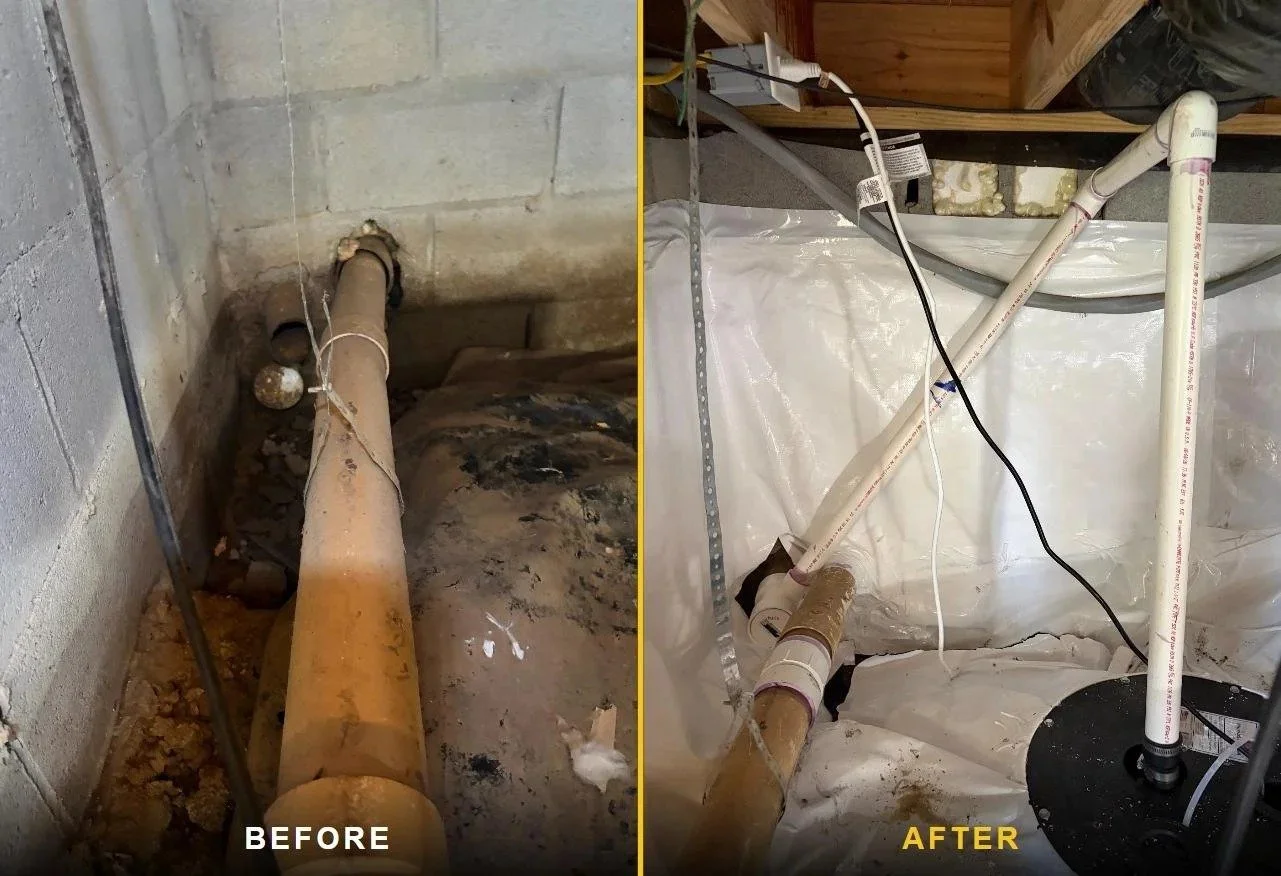
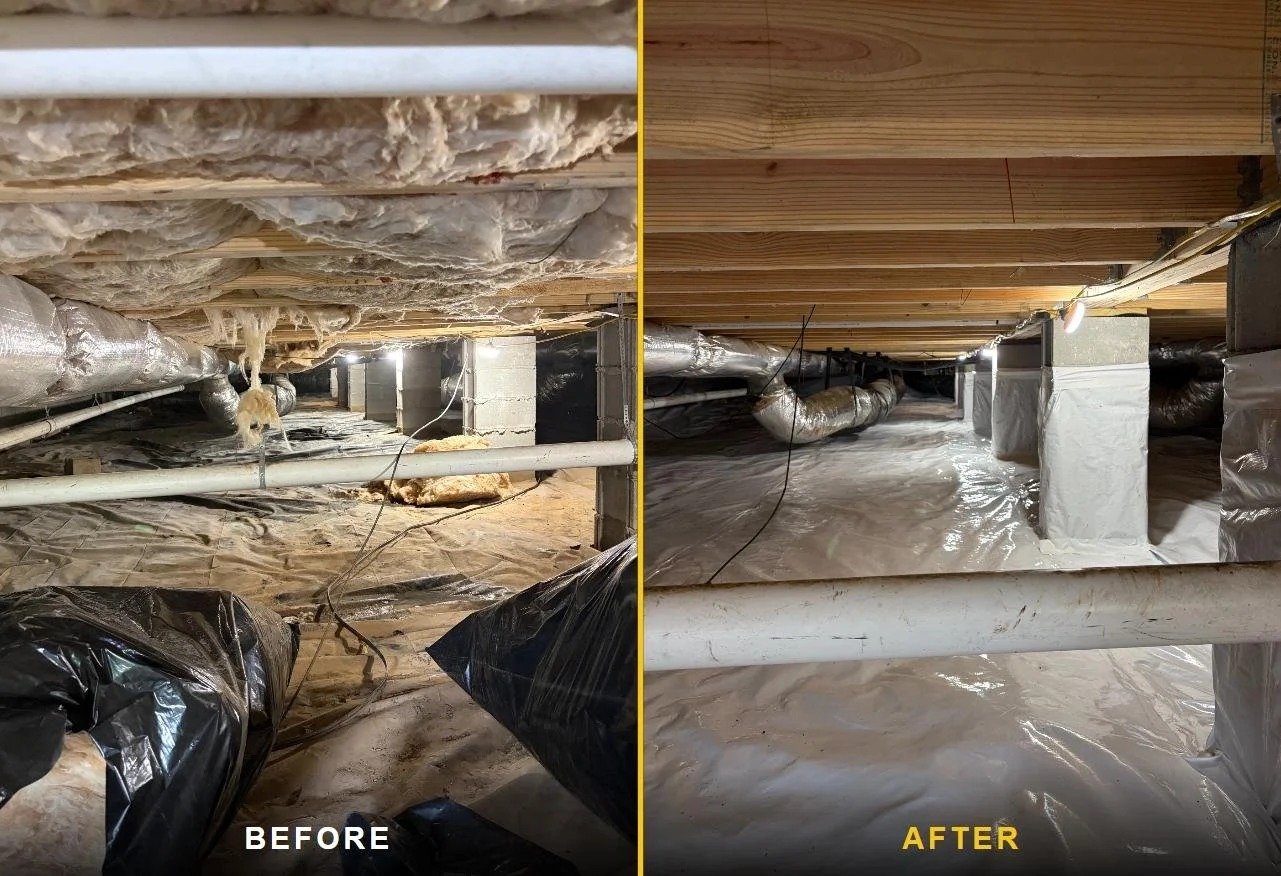
Loose builder poly does not survive. If the sheeting is in pieces, only covers part of the floor, or is buried under dirt, it is not doing meaningful work. See vapor barriers.
9. Insulation on the ground
Fiberglass batts that fall out of the joist bays did not fail because of gravity. They absorbed moisture, gained weight and let go. Insulation lying on the dirt is one of the most reliable signs of a humidity problem, and it is the single most common thing we photograph.
10. Condensation, rust and visible growth
Water on the ductwork in summer, rust on strapping and metal, and white, grey or dark patches on joists and the subfloor all point the same direction. So does standing water or a mud line on the block after a storm, which points at drainage rather than just humidity.
How to check it yourself, safely
| What to do | What you are looking for |
|---|---|
| Open the access door and smell | Musty, earthy or sour odor |
| Shine a light across the floor | Standing water, mud, torn plastic, bare dirt |
| Look up at the joist bays | Fallen or sagging insulation, dark staining |
| Look at ductwork and metal | Condensation, rust, water tracks |
| Put a cheap humidity sensor inside | Sustained readings above about 60 percent |
Do not disturb anything that looks like growth, and do not spend time in a crawl space you are not comfortable in. A wireless humidity sensor set just inside the access door will tell you a great deal for very little money.
What to do next
One sign on its own may mean nothing. Three or four together almost always means the crawl space is holding moisture. The fix depends on whether the water is arriving as liquid, as vapor, or as humid outside air, and that is what an inspection determines.


Why crawl space air ends up in your living room
Up to half the air you breathe on your main floor started in the crawl space. Warm air rises and escapes through the upper part of the house, and that pulls replacement air in from the lowest point available — the vents and gaps under your floor. Your house is, in effect, breathing through the dirt beneath it.
This is why a crawl space problem almost never stays a crawl space problem. Damp wood, wet insulation and mold on the ground below all put something into that air, and within hours it is the air in your bedroom. It is also why the first sign most homeowners notice is a smell rather than anything they can see.
Two things follow from that. Treating the symptom upstairs does not work — a dehumidifier in the hallway is fighting a crawl space that keeps feeding it fresh humid air. And ductwork running through that space makes it worse, because the system pulls on the same air and distributes it through the house faster.
A quick way to confirm it
Open the crawl space door and smell it. Most homeowners never have. If the odor under the house matches what you smell inside, you have your answer. The other tell is timing: a smell that spikes on humid days and after rain, then fades during a dry stretch, is moisture-driven and coming from below.
What to do about mold you can already see
If you have gone under the house and found white or grey growth on the joists, the instinct is to reach for a spray bottle. That is the wrong first move. Mold in a crawl space is not the problem; it is the receipt for a moisture problem that has been running for a while, and anything you kill on Saturday grows back by the next humid week if the water is still arriving.
The order that actually works is: find the water, stop the water, dry the space, then treat what grew. Skipping to the last step is why so many homeowners end up paying for crawl space mold treatment twice. When we quote it, the treatment is one line on a scope that starts with the drainage and the liner, because that is the part that keeps it gone.
Seeing two or three of these? We inspect for free, photograph what is actually under the house, and leave a written estimate before we go.
Frequently asked questions
What are the signs of a crawl space moisture problem?
A musty smell that worsens in summer, cold or bouncy floors, sticking doors, cupping hardwood, rising cooling bills, recurring pests, fallen insulation, torn plastic, condensation on ductwork, rust, and visible growth on framing.
Can a damp crawl space make you sick?
A damp crawl space can raise humidity and mold spore levels in the living space above it, and some people are sensitive to that. It is not the only possible cause of symptoms, but it is worth ruling in or out. Anyone with ongoing symptoms should speak with a medical professional.
Why does my house smell musty in summer but not winter?
Because outdoor dew points are far higher in summer. Humid air entering a cool crawl space condenses, humidity rises, and that air moves up into the house.
Is a little water in the crawl space normal after heavy rain?
Common, but not normal. Water that arrives after storms and takes days to leave indicates a grading or drainage issue that should be corrected before anything is sealed.
How do I check my crawl space humidity?
An inexpensive wireless temperature and humidity sensor placed just inside the access door will tell you most of what you need to know. Sustained readings above about 60 percent are a problem.
