
For most Middle Tennessee homes with a dirt-floor or vented crawl space, yes. Our climate is close to a worst case for wood framing: long humid summers, clay-heavy soil that holds water against the foundation, and foundation vents that pull that humid air straight under the house. Full encapsulation in this area runs roughly 4,000 to 15,000 dollars. Whether it is worth it for your house comes down to how wet the space already is, how long you plan to stay, and what the moisture is already costing you in repairs, humidity and comfort.
What "worth it" actually means for a crawl space
Encapsulation is not a decorating project. Nobody sees it. It earns its keep by removing the one thing that damages a crawl space over time, which is water, either liquid water coming in or water vapor rising out of the ground and condensing on cold surfaces.
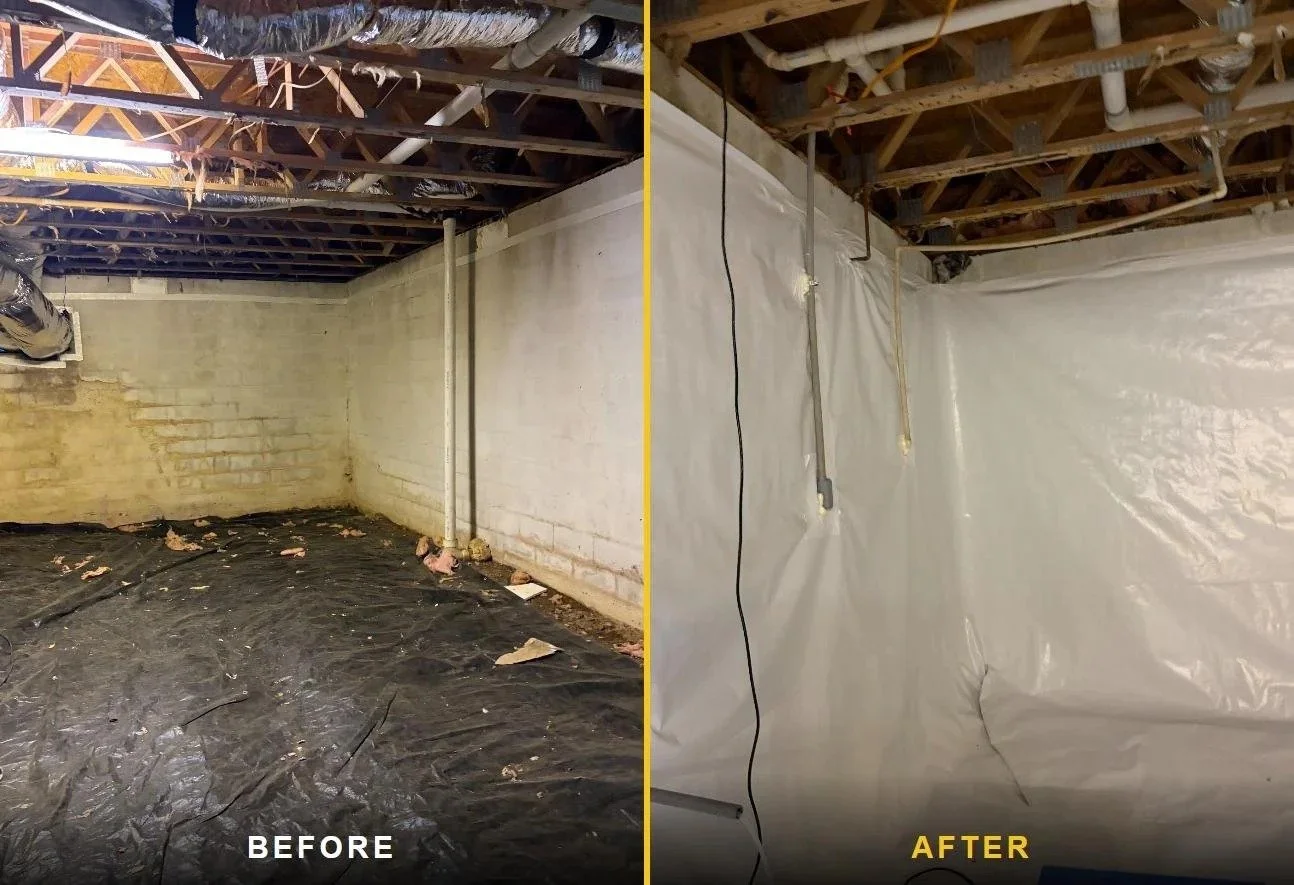
So the honest way to judge the return is to ask what the moisture is already doing. In the crawl spaces we open up around Murfreesboro, Smyrna and Nashville, the same list shows up over and over: insulation that has fallen out of the joist bays and is lying on the dirt, black plastic that was laid loose twenty years ago and is now torn and buried, rusted ductwork, musty air pushing up through the floor registers, and floors that feel cold and soft in the same spot every winter.
None of that gets better on its own. It gets slower or faster depending on how much water is under there.
Why Middle Tennessee is harder on crawl spaces than most of the country
Three things stack up here, and they are the reason a vented crawl space that works fine in a dry climate does not work well in Rutherford, Williamson, Wilson or Davidson County.
- Summer dew points. From roughly June through September our outdoor dew point regularly sits in the high 60s and low 70s. A crawl space is one of the coolest parts of the house. When that air comes through the vents and touches cool ductwork, plumbing and framing, it gives up its moisture as condensation. The vents that were supposed to dry the crawl space are the delivery system for the water.
- Clay soil. Much of Middle Tennessee sits on clay-rich soil over limestone. Clay does not drain. It holds water against the footing and releases vapor slowly and steadily into the crawl space long after the rain stops.
- Age and grade. A lot of the housing stock here was built before anyone worried about vapor barriers, and yard grading has usually shifted over the decades so that water now runs toward the house instead of away from it.
Wood that stays above roughly 20 percent moisture content is in the range where decay fungi can get established, and mold does not need standing water at all, only a damp surface. That is why a crawl space can be bone dry underfoot and still be quietly failing.
What you actually get for the money
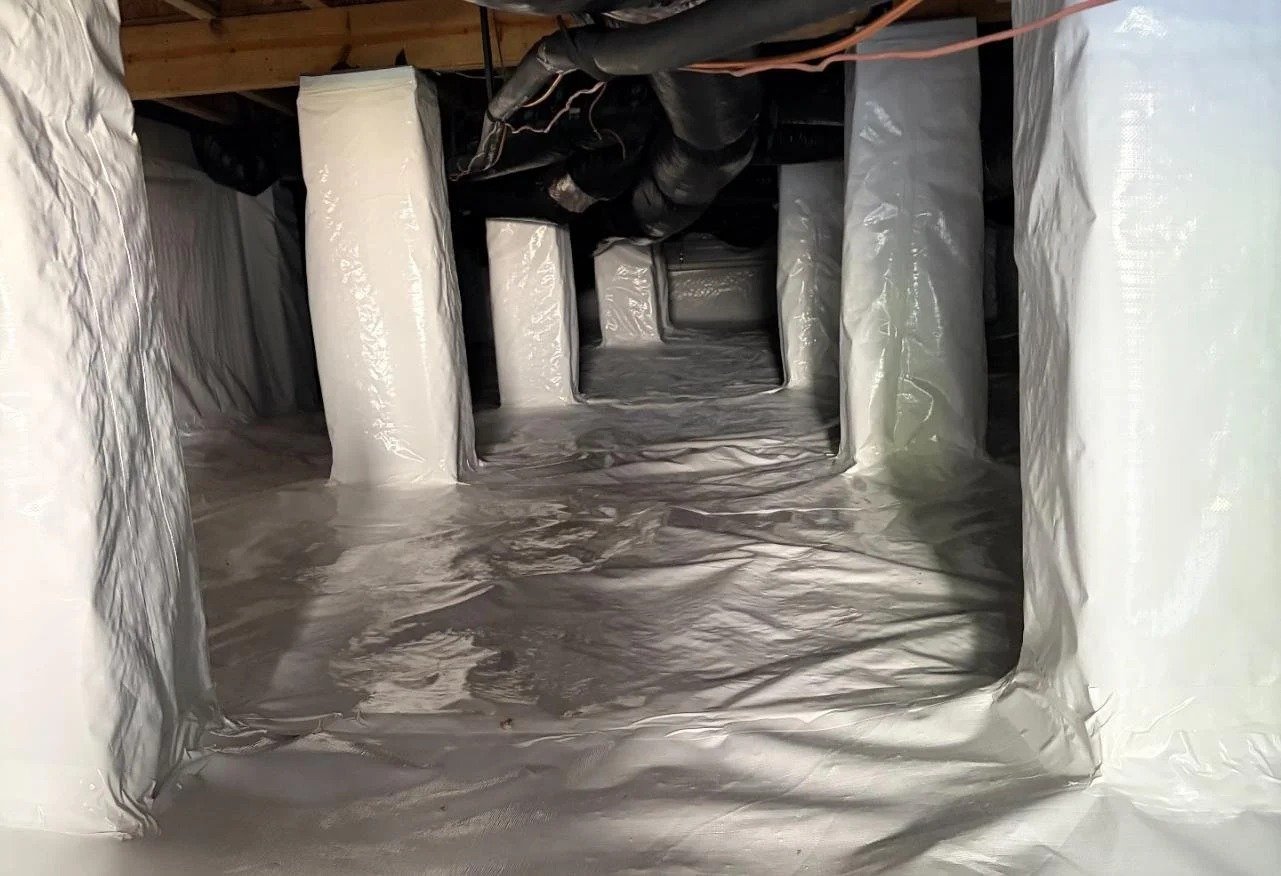
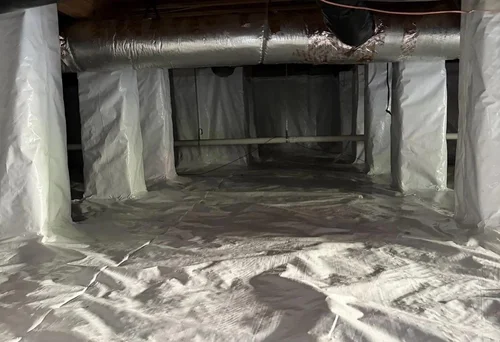
A real encapsulation is a system, not just plastic on the ground. Here is what each piece is doing and what happens if you skip it.
| Component | What it does | What happens without it |
|---|---|---|
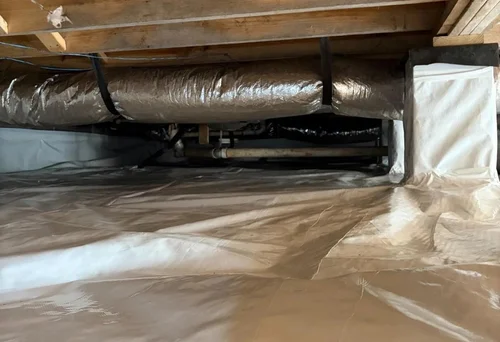
| Sealed vapor barrier | Reinforced liner across the floor and up the walls, seams taped, piers wrapped | Ground moisture keeps evaporating into the space all year |
| Sealed foundation vents | Stops humid outside air from being pulled in during summer | You seal the ground and then invite the humidity back through the walls |
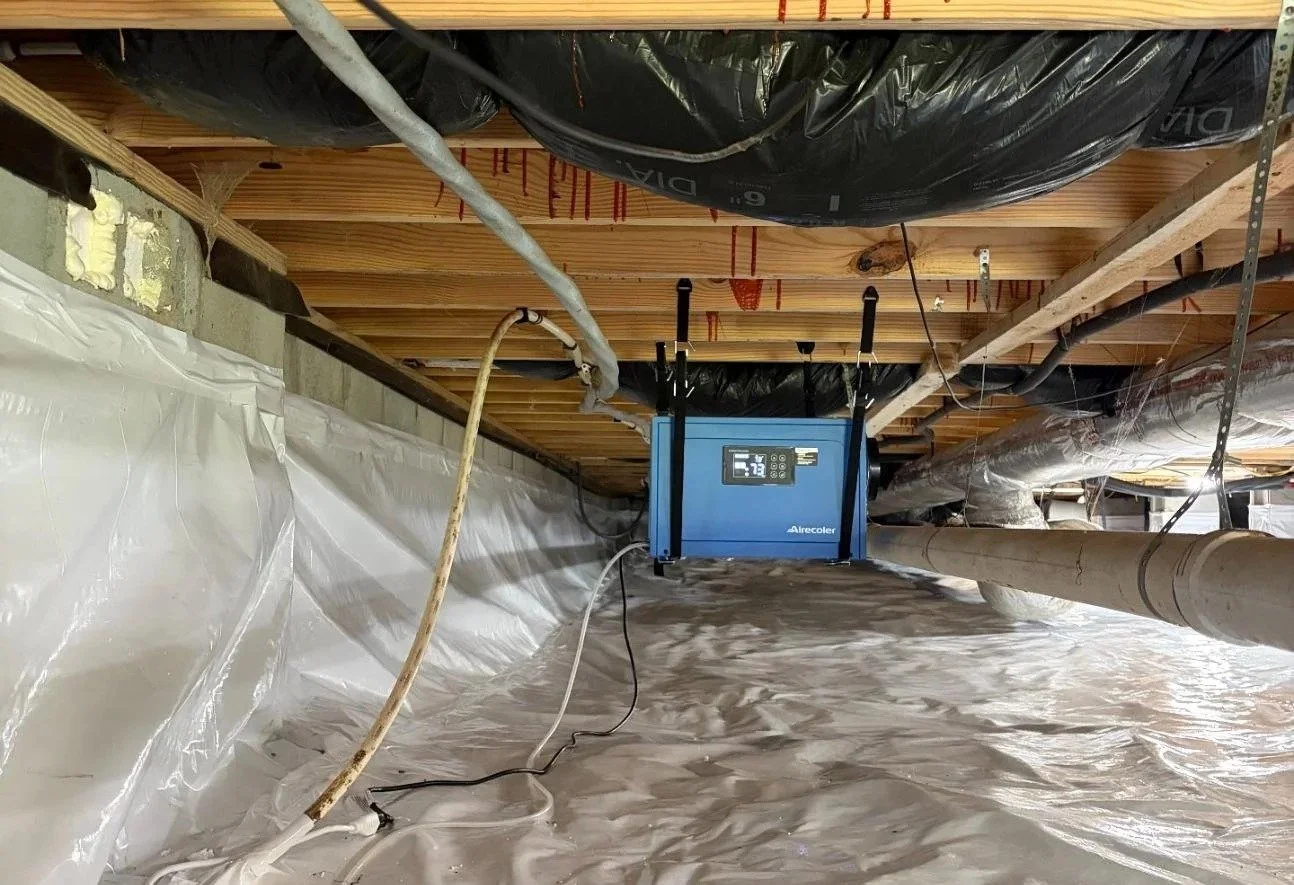
| Dehumidifier | Holds the sealed space at a stable relative humidity year round | Humidity drifts up in shoulder seasons and the liner alone cannot correct it |
| Drainage and sump | Gives liquid water a path out before it ever reaches the liner | Water pools under the barrier and finds the seams |
| Wall insulation | Brings the crawl space inside the thermal envelope | Floors stay cold and the HVAC works harder |
When encapsulation is clearly worth it
- You can see standing water, mud, or a wet line on the block after a hard rain.
- The insulation has fallen down, or the existing plastic is torn, thin, or only covers part of the floor.
- There is a musty smell in the house, especially on the first floor in summer.
- Floors feel soft, bouncy, or noticeably cold in the same area every year.
- You have had recurring pest activity under the house.
- An inspector or agent has already flagged the crawl space, or you plan to sell within a few years.
- You plan to stay in the house long term. The longer you stay, the more the fix is worth relative to the damage it prevents.
When it is probably not worth it yet
We will tell you this in person too. If your crawl space has an intact barrier, dry framing, no odor and no drainage problem, encapsulating it is optional. If you have an active water intrusion problem, encapsulating before fixing the drainage is money spent in the wrong order, because the liner will sit on top of water it cannot control. And if you are selling in the next few weeks, a full system may not pay for itself faster than a targeted repair would.
A free inspection is how you find out which of those you are in. We would rather tell you the crawl space is fine than sell you something you do not need.
What it costs in Middle Tennessee
Full encapsulation in our service area generally runs between 4,000 and 15,000 dollars depending on square footage, how much debris and old material has to come out, whether drainage or a sump pump is needed, and whether any structural support work is involved. A vapor barrier only, in a crawl space that does not need drainage, starts around 2,500 dollars. Sister joist repairs run around 800 dollars per joist.
The full breakdown, including what drives a quote up or down, is on our crawl space encapsulation cost page.
How to decide
Get someone under the house who will show you photographs of what is actually down there and give you a written number before they leave. Compare that number against what the moisture is already costing you: repeat pest treatments, HVAC running harder, floors you do not trust, and framing that is quietly getting worse. For most Middle Tennessee homes with a wet or vented crawl space, that comparison is not close.


Not sure where your crawl space stands? We inspect for free, take photos of what we find, and leave a written estimate before we pull out of the driveway. No pressure and no charge.
Frequently asked questions
Does crawl space encapsulation increase home value in Tennessee?
It does not appraise like a kitchen remodel, but it removes a problem that shows up in almost every home inspection. A documented, warrantied encapsulation with before and after photos takes the crawl space off the negotiating table, which is where it usually costs sellers money.
Do I really need a dehumidifier, or is the liner enough?
In this climate the liner alone usually is not enough. Sealing the ground stops most of the vapor, but a sealed crawl space still needs something actively removing moisture in humid months. See crawl space dehumidifiers.
Is it legal to seal foundation vents in Tennessee?
Closed, conditioned crawl spaces are a recognized construction method and are addressed in the residential code. The requirement is that a sealed crawl space be handled as a system, with a continuous ground vapor barrier and a way to control moisture, rather than simply having its vents blocked off.
How long does encapsulation last?
A properly installed reinforced liner is a long term product, not a seasonal one. What shortens its life is traffic damage, other trades cutting through it, and water that was never drained properly in the first place. Our workmanship carries a limited lifetime warranty.
How long does the work take?
Most residential crawl spaces in our area are a one to three day job. Larger spaces, heavy debris removal, drainage work or structural repairs extend that.
Crawlspace Crew is based at 423 Douglas Ave in Murfreesboro and works across Middle Tennessee, including Murfreesboro, Smyrna, Nashville, Franklin and Lebanon.
