
Most residential crawl space encapsulations in Middle Tennessee take one to three days on site. A straightforward barrier-only job in a clean, average-sized crawl space is often a single day. Add heavy debris removal, old insulation, drainage and a sump pump, or structural repairs, and it runs three to five days. The work almost never requires you to leave the house, and in most cases you can use the house normally the whole time.
Day by day, what actually happens
| Stage | Typical time | What is happening |
|---|---|---|
| Inspection and estimate | Under an hour, before the job | Measure, photograph, humidity reading, written estimate |
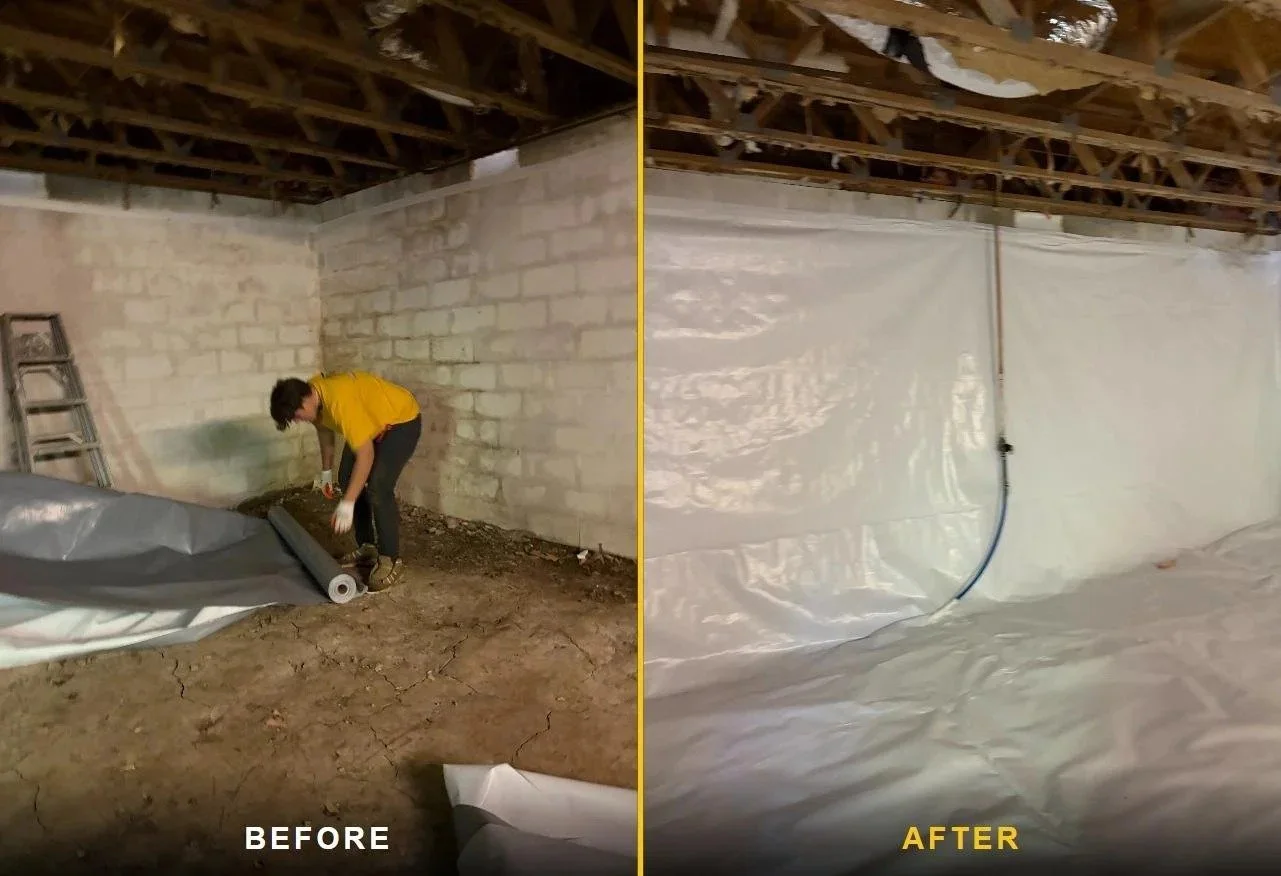
| Cleanout and demo | A few hours to a full day | Old plastic, fallen insulation, construction debris and organic material come out |
| Structural repairs, if needed | Half a day to two days | Sister joists, girder and pier work, done before anything gets covered |
| Drainage and sump | Half a day to a day and a half | Trenching, gravel, pipe, basin, pump and discharge line |
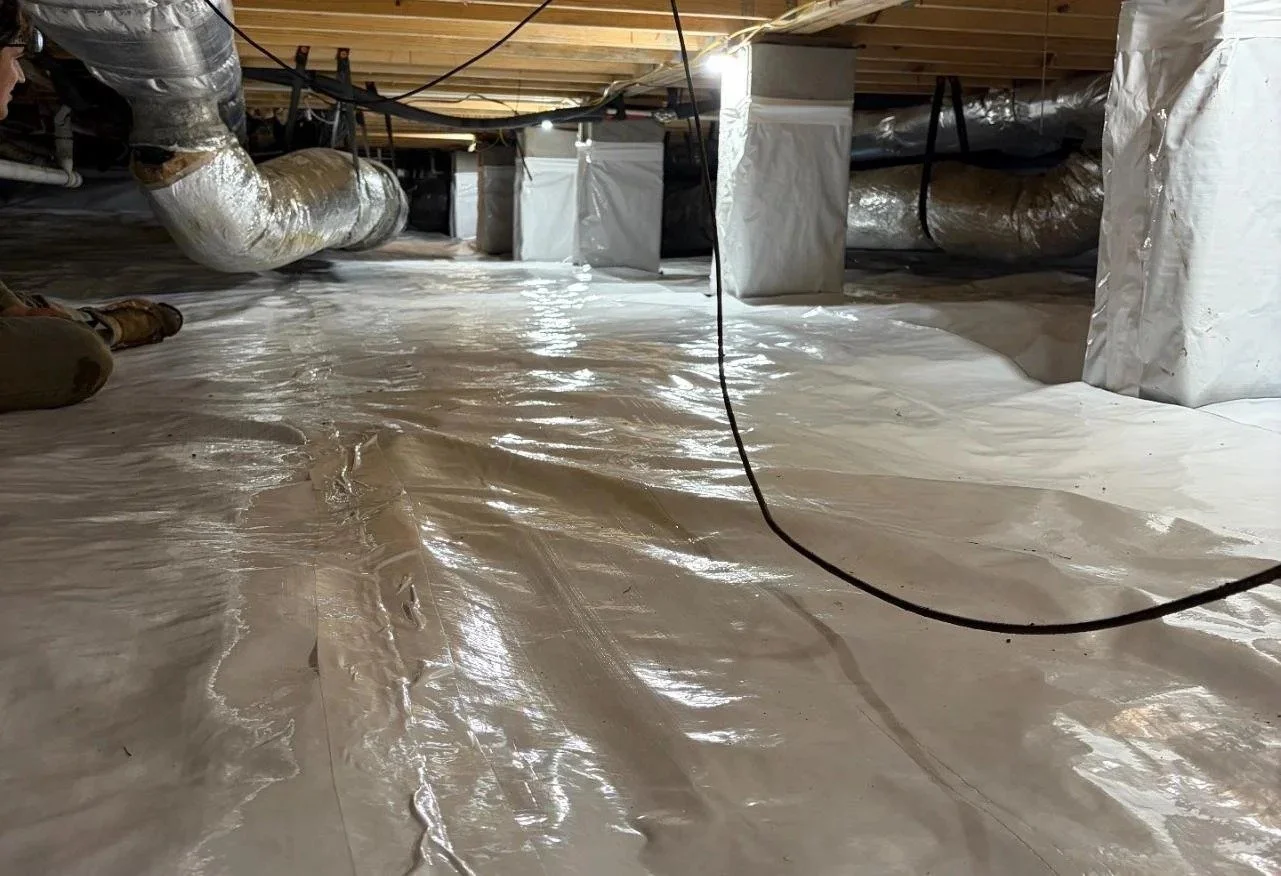
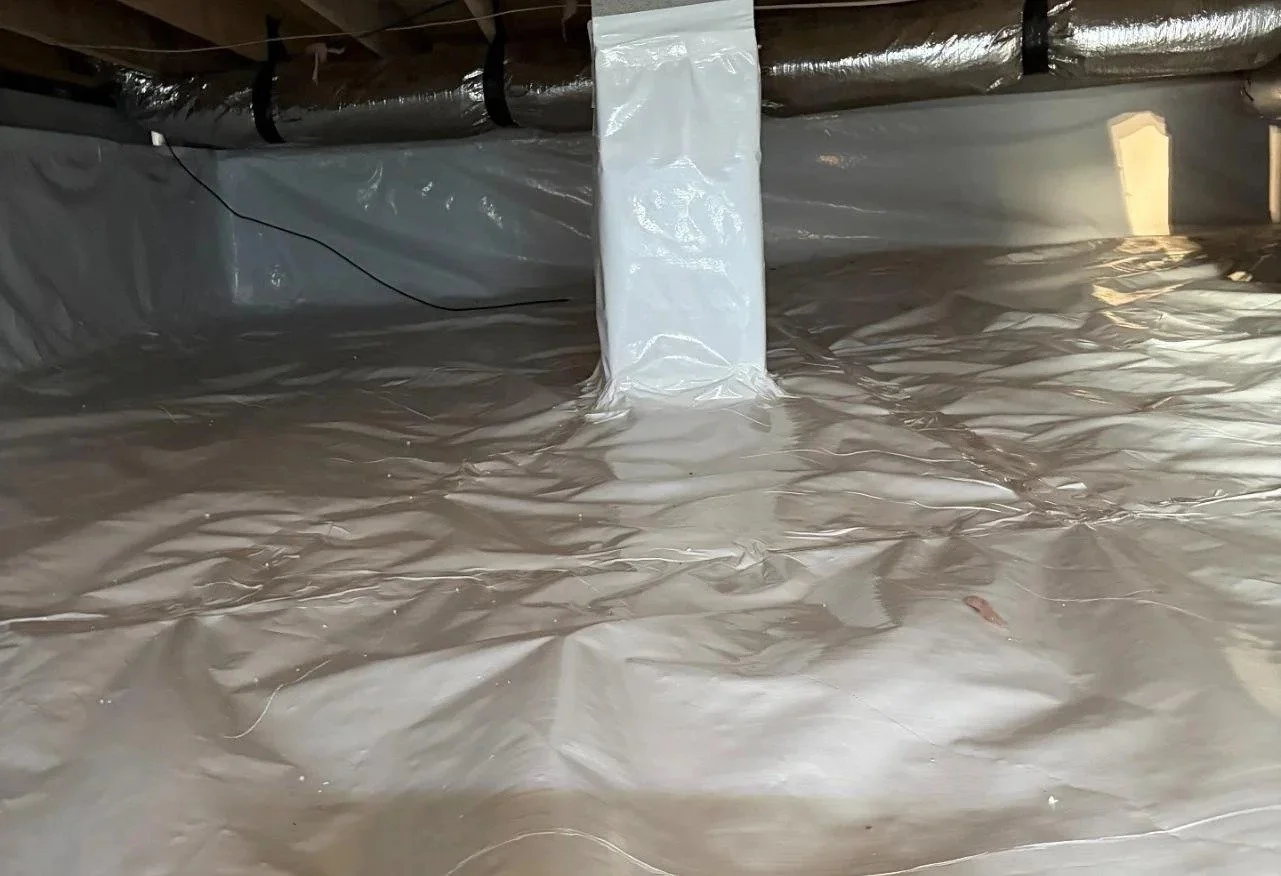
| Liner installation | Half a day to a day and a half | Floor and walls, seams sealed, piers wrapped |
| Vent sealing and dehumidifier | A few hours | Vents sealed, dehumidifier set and drained |
| Walkthrough | Under an hour | After photos, how the system works, warranty paperwork |
What makes a job take longer
- Access. A small access door or a very low clearance crawl space slows every stage, because every roll of liner and every bucket of debris comes through that opening.
- How much has to come out. Decades of fallen insulation, torn plastic buried in dirt, and construction debris left by the original builder is the single biggest schedule variable.
- Standing water. If water has to be dealt with before anything else can happen, the drainage work sets the pace.
- Structural work. Sister joists, girder repairs and new piers all have to be finished before the liner goes down.
- Size. A 900 square foot crawl space and a 2,400 square foot crawl space are not the same job.
- Weather. We can work in a crawl space in the rain, but exterior grading and discharge line work sometimes has to wait.
What you need to do
Very little, which is one of the better things about this work.
- Make sure the crawl space access is reachable. If it is inside a closet or behind stored items, clear a path.
- Keep pets away from the access opening while the crew is working.
- If the access is outside, we need to be able to park reasonably close for material and debris.
- Expect some noise, especially during cleanout and any drainage work.
You do not need to leave the house, and there is no curing or ventilation period to wait out.
When will you notice a difference?
Humidity starts dropping the same day the dehumidifier is set, but it takes time to pull moisture out of framing and materials that have been damp for years. Most homeowners tell us the musty smell fades over the first one to three weeks. Floor comfort improves as soon as insulation and air sealing are addressed. If cupped hardwood is going to relax, that happens over a season, not overnight, and some of it will not fully recover.
How far out do we schedule?
It varies with the season. Late spring through early fall is our busiest stretch, because that is when the symptoms are most obvious in the house. Getting the inspection on the calendar is the part worth doing early, because the inspection is free and it tells you what you are actually dealing with.


Want a real timeline for your house? The free inspection gives you a scope, a schedule and a written price before we leave the driveway.
Frequently asked questions
How long does crawl space encapsulation take?
Most residential jobs in Middle Tennessee take one to three days on site. Heavy cleanout, drainage work or structural repairs can extend that to three to five days.
Do I need to leave my house during encapsulation?
No. In almost all cases you can use the house normally throughout, and there is no curing or ventilation period afterward.
How long before the musty smell goes away?
Most homeowners notice it fading over the first one to three weeks, as moisture comes out of framing and materials that had been damp for years.
What makes an encapsulation job take longer?
Tight access, low clearance, large square footage, heavy debris and old insulation removal, standing water requiring drainage, and any structural repairs that must be completed before the liner goes down.
Can encapsulation be done in winter?
Yes. The work happens under the house and is not seasonal. Winter is often easier to schedule than mid-summer.
Keep reading: What crawl space encapsulation costs in Middle Tennessee and is it worth it?
